
500 Years of Beretta: Where Gunmaking Becomes a Journey Through Time
- 57 minutes ago
- 9 min read

In 1526, Bartolomeo Beretta delivered 185 arquebus barrels to the Arsenal of Venice. Five hundred years later, the Beretta name stands for far more than shotguns and pistols. It represents a global group of companies, centuries of Italian craftsmanship—and a corporate culture that left even our firearms expert David Mischkulnig deeply impressed.
There are corporate anniversaries. And then there is Beretta. Any company that reaches 25, 50, or 100 years has every reason to be proud. At Beretta, even a century suddenly seems almost modest. In 2026, the company from Gardone Val Trompia celebrates 500 years of continuous history—half a millennium shaped by gunmaking, family heritage, wars, technological revolutions, social upheaval, and industrial progress.
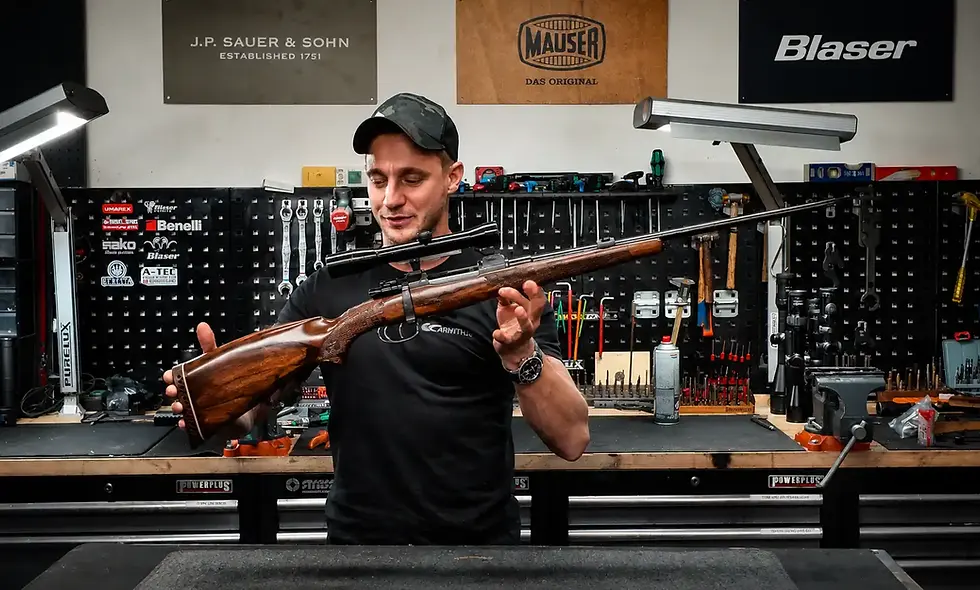
Our Shot & Stillness firearms expert, David Mischkulnig of Alpen Adria Jagd in Villach, Austria, traveled to Italy for the anniversary celebrations. And although he had visited Beretta several times before, his reaction was much the same as ever: genuine enthusiasm.
“It’s incredible,” he says. “Definitely one of the best firearms manufacturers in the world. Extremely clean production, extremely precise—and at the same time, there is an unbelievable amount of tradition throughout the entire company.”
But for Mischkulnig, something else matters even more: despite its size, Beretta does not feel like a faceless industrial corporation. “This isn’t some soulless company simply churning out guns, like certain other European manufacturers. You can see that traditional DNA reflected in the products. And they put enormous emphasis on making sure everything works exactly as it should.”
It All Started With a Piece of Paper
Beretta’s history can be dated with remarkable precision. On October 3, 1526, master gunmaker Bartolomeo Beretta of Gardone delivered 185 arquebus barrels to the Arsenal of the Republic of Venice. He was paid 296 ducats for the order. The corresponding payment record is still preserved in the State Archives of Venice and is regarded as the official starting point of the company’s history.
Today, that seemingly ordinary document is almost as significant as some of the historic firearms produced by Beretta itself. It provides evidence of an extraordinary continuity: since 1526, the company has remained shaped and led by the same family—now in its 15th generation. Beretta describes itself as the world’s oldest active firearms manufacturer, while Beretta Holding goes even further, referring to the company as the world’s oldest continuously operating manufacturing enterprise.
Put that into perspective. When Bartolomeo Beretta was shipping gun barrels to Venice, modern nation-states as we know them did not exist. There were no railroads, no electricity, and certainly no industrial mass production. Columbus’s first voyage across the Atlantic was only a few decades in the past. And in Gardone, men were already forging gun barrels.
The Invoice in Venice

That is precisely why David’s anniversary trip took him not only to Gardone Val Trompia, but also to Venice. There, the group was able to see the historic document on which Beretta’s official story begins.
For a firearms dealer and hands-on gun enthusiast like Mischkulnig, this was more than ceremonial nostalgia. It created a direct link between today’s Beretta products and the world from which the company emerged. Walking through the narrow streets of Venice, surrounded by centuries-old architecture and visiting traditional Venetian mask makers, it became clear what Beretta appears to be trying to convey with its 500th anniversary.
This is not simply about the number 500. It is about Italian craftsmanship as a cultural continuum. Traditional Venetian carnival masks are still created through numerous individual steps, guided by experience, judgment, and the human hand. Later, in Gardone, you encounter much the same philosophy. Only there, the materials are steel and walnut.
Gardone Val Trompia: The Heart Still Beats in the Same Place
Mention Beretta today and most shooters may first think of a Beretta 92 pistol, a DT11, a Silver Pigeon, or, more recently, the BRX1 straight-pull rifle.
But to truly understand the company, you have to go to Gardone Val Trompia. Fabbrica d’Armi Pietro Beretta is still headquartered there today. David describes the facility with a single word: “Massive.”
Inside the factory, modern machining centers, quality-control systems, and digital product development exist alongside traditional gunsmithing. Beretta conducts much of its research and development in-house—from engineering and simulation to prototyping and industrialization. The company currently reports more than 220 active patents, with roughly 1,400 patents filed over the course of its history.
The numbers behind the historic name make one thing clear: today’s Beretta has little in common with the romantic image of a tiny artisan gun shop. According to Beretta Holding, Fabbrica d’Armi Pietro Beretta employs approximately 937 people, exports to around 80 countries, and produces roughly 1,500 firearms per day. Eighty-two employees work directly in research and development.
And yet, within those very same walls, you still find engravers working steel by hand with hammer and chisel. That contrast is exactly what makes Beretta so fascinating.
Between CNC Machines and the Engraver’s Chisel

For Mischkulnig, the visit to Beretta’s custom gun and engraving departments was therefore one of the most impressive parts of the entire trip. Here, firearms leave the world of purely functional tools and enter another realm altogether.
At the Pietro Beretta Custom Atelier, highly exclusive one-off guns and limited-production pieces are created for individual customers. Stocks are fitted to the shooter. Wood is personally selected. Metal components receive extensive hand-finishing. Engraving can be tailored entirely to the customer’s wishes. According to Beretta, particularly elaborate projects can require an engraver to spend 1,000 hours or more on a single firearm.
The result can be closer to fine art than conventional firearms production.
A Beretta SO10 EELL, for example, may feature hunting scenes, landscapes, portraits, gold inlays, or enamel work. Even the leather cases for these guns are handcrafted in the Gardone atelier and individually fitted to each firearm.
That helps explain David’s fascination. At Beretta, two worlds exist side by side.
On one side: highly automated modern manufacturing. On the other: an engraver spending hour after hour working on only a few square inches of steel.
Beretta Has Become Much Bigger Than Beretta
Another thing quickly becomes apparent during a visit: when people talk about “Beretta” today, they have to distinguish between Fabbrica d’Armi Pietro Beretta and Beretta Holding. The northern Italian firearms manufacturer has evolved into one of the most important international groups in the hunting, shooting, optics, and ammunition industries.
Today, Beretta Holding includes more than 50 companies, over 20 brands, and roughly 6,000 employees. For 2025, the group reports approximately €1.68 billion in revenue and €254 million in earnings.
For hunters and shooters, its roster of brands reads almost like a walk through a very well-stocked gun store. Alongside Beretta, the group includes names such as Benelli, Franchi, Sako, Tikka, Steiner, Burris, Stoeger, Uberti, Chapuis Armes, Holland & Holland, and Hausken. Following the acquisition of the former RUAG Ammotec ammunition business, the group also includes major ammunition brands such as Norma, RWS, Geco, Rottweil, and SwissP.
That means Beretta can now provide a substantial portion of virtually everything a hunter might need: rifle, shotgun, handgun, ammunition, optics, suppressor, apparel, and accessories. And much of it comes from brands that continue to operate with completely independent identities.
Sako and Tikka: Finnish Precision Under Italian Ownership
For hunters in particular, the Sako and Tikka side of Beretta Holding is especially interesting. Sako continues to represent Finnish bolt-action rifles and precision firearms, while Tikka rifles are also developed and manufactured by Sako in Finland. According to the manufacturer, every Tikka rifle must pass an accuracy test before leaving the factory and is required to shoot sub-MOA groups.
This is where Beretta’s corporate strategy becomes particularly clear. The group does not necessarily absorb brands and erase their identities. Instead, their heritage and technical character remain intact. A Sako remains Finnish. A Benelli remains Italian. A Holland & Holland remains British. Beretta Holding simply provides the larger structure around them.
Benelli: Italy’s Other Major Pillar
With Benelli, the group also owns one of the world’s leading manufacturers of semiautomatic shotguns. Production remains in Urbino, Italy. Beretta Holding specifically describes Benelli as a technology-driven brand whose development and manufacturing are concentrated at that location.
The coexistence of two major Italian firearms brands demonstrates just how broad the group has become. Beretta has traditionally been strong in over-under shotguns and pistols and is increasingly active in the rifle market. Benelli, meanwhile, has become synonymous around the world with semiautomatic shotguns. Franchi serves different price points and applications again. Together, the brands create an exceptionally broad portfolio within a single corporate group.
Holland & Holland: When Even Beretta Buys Luxury
At the opposite end of the spectrum sits Holland & Holland. The legendary London gunmaker has been part of the Beretta Group since 2021 and remains one of the most prestigious names in traditional British gunmaking. According to Beretta Holding, roughly 50 handcrafted guns are produced there each year.
The fact that Beretta—a company that is itself practically synonymous with historic European gunmaking—would acquire a name like Holland & Holland says a great deal about the scale and ambition of the group. This is no longer merely about gaining market share. It is also about preserving expertise, tradition, and different schools of European gunmaking.
Steiner, Burris, and Hausken
Beretta has also built a substantial position in the optics and accessories market. Germany’s Steiner and American optics manufacturer Burris are both part of the group, as is Norwegian suppressor manufacturer Hausken.
For the customer, the result is something close to an ecosystem: A rifle from Finland. Optics from Germany. Ammunition from Sweden or Germany. A suppressor from Norway. And ultimately, all of it belongs to the same corporate family.
The Big Move: Norma, RWS, Geco, and Rottweil
Beretta took a decisive strategic step in 2022, when Beretta Holding acquired the ammunition business of RUAG Ammotec. In a single transaction, 16 companies in 12 countries and approximately 2,700 employees joined the group. More importantly, some of Europe’s most recognizable ammunition brands moved under the Beretta umbrella: RWS, Norma, Geco, and Rottweil.
The acquisition filled a major strategic gap. A company group that already manufactured firearms, optics, and accessories could now produce one of the most important consumable products in shooting and hunting: ammunition. At that point, Beretta had definitively evolved from a firearms manufacturer into a comprehensive hunting and shooting group.
And Yet, a Shotgun Is Still a Shotgun
The economic scale of Beretta Holding is impressive. Yet interestingly, that is not what David Mischkulnig talks about most. What fascinates him are different things. Clean workmanship. Fit. Finish. Wood. Machining. And one very simple question: Does the product work?
During the visit, the group spent an entire day on the shooting range. They were able to test a variety of firearms and also attended product training sessions covering technical details, spare parts, and future developments. They were even shown upcoming products. Which ones? That is where David laughs. He is still under embargo.
He will only reveal this much: new or revised models are planned within the shotgun lineup, and further developments in handguns were also presented. There are also updates to rifles that should prove interesting both for hunters and for shooters interested in longer-range applications. For now, he cannot say more. Which, of course, only makes us more curious.
Beretta Is Celebrating Its Anniversary With New Guns, Too
Beretta has already officially introduced several commemorative firearms for its 500th anniversary. Among them is the BRX1 500 Years Limited Edition. Exactly 1,526 rifles will be produced—a direct reference to the year in which Beretta’s documented history began.
For the first time, the anniversary version of the straight-pull rifle comes standard with a walnut stock and fore-end, along with an elaborately decorated nickel-plated receiver.

The 687 Silver Pigeon 500 Years is also being offered as a commemorative model.
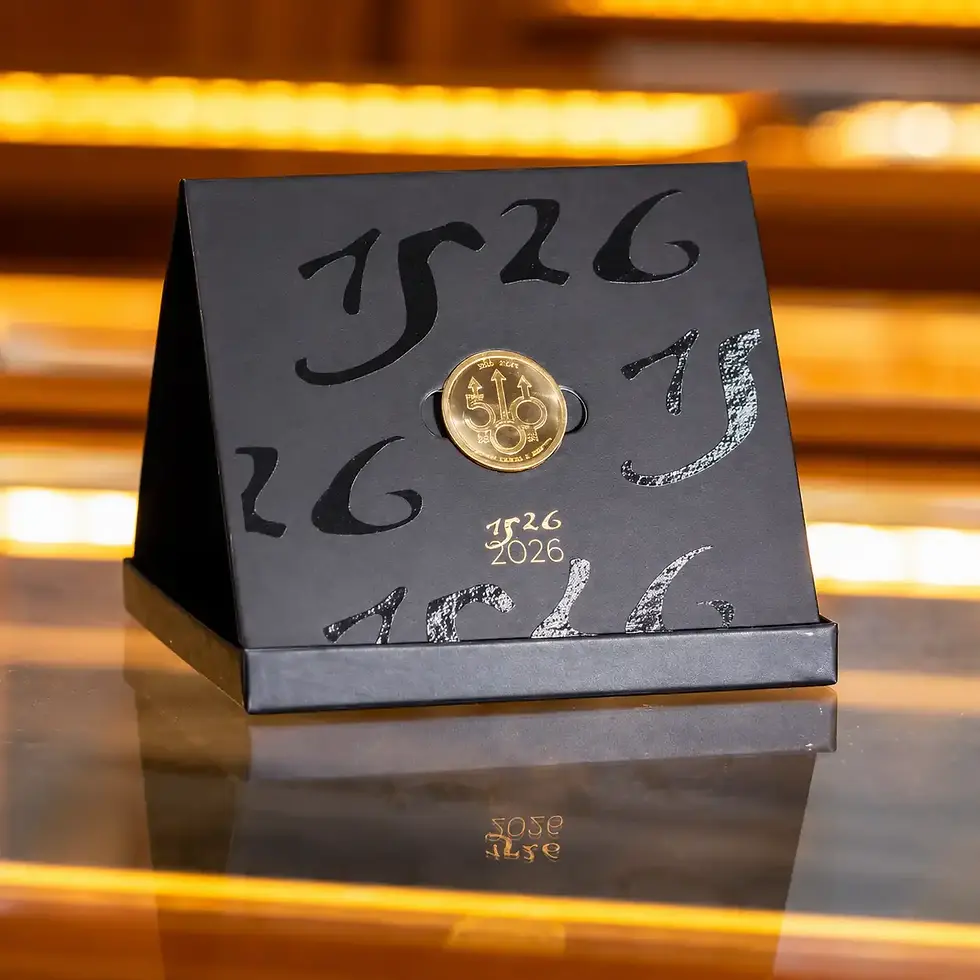
Beretta plans to produce 1,526 hunting versions and 1,526 sporting versions. Customers who purchase and register a new Beretta firearm in selected markets during 2026 may also receive a special anniversary medallion created specifically for the occasion. It was developed in cooperation with Italy’s official state mint and printing institute.

Beretta, in other words, is not treating its 500th birthday as a single event.
The anniversary stretches across an entire year of firearms, collectibles, apparel, and celebrations.
How Does a Company Survive for 500 Years?
Perhaps that is the most fascinating question of all. Beretta has watched kingdoms rise and fall. Wars. Revolutions. Industrialization. Two world wars. The digital age. And now artificial intelligence and additive manufacturing.
So why is the company still here?
Pietro Gussalli Beretta once summed up the philosophy behind the company in a simple idea: you may be old, but you must never become old. Innovation, in other words, is what allows tradition to survive.
That thought may explain Beretta better than any anniversary film ever could.
Tradition alone is not enough. A company that spends 500 years admiring its own past probably never reaches its 500th anniversary.
Beretta, by contrast, continues to invest heavily in research, production technology, and new markets. In 2022 alone, group-wide research and development spending amounted to roughly €25 million, while manufacturing capacity was expanded and production processes continued to become increasingly digital.
And That Is Exactly Why David Came Away Impressed

Which brings us back to David. After his trip to Italy, the number 500 is not what stayed with him most. What remains is the feeling that despite its enormous scale, Beretta still understands where it came from. “You can see that traditional DNA in every product,” he says. At first, that may sound almost sentimental. But once you have stood inside an engraving atelier where craftsmen work by hand while state-of-the-art manufacturing equipment operates only a few yards away, you begin to understand exactly what he means.
Beretta appears to have learned something fundamental: Tradition does not mean keeping old technology alive simply because it is old. Tradition means passing on a standard.
To the next generation. And to the next machine.


Comments