
Red Deer Aren’t Naturally Nocturnal – Have We Hunters Made Them That Way?

Red deer have a reputation for being elusive woodland animals, rarely venturing out of cover until the sun goes down. But is that really their natural behavior? Recent scientific studies suggest that hunting pressure and outdoor recreation are dramatically changing the daily routines of red deer. The findings are eye-opening – and they raise some uncomfortable questions for hunters.
It's a scene just about every red deer hunter knows. The sun slips behind the mountains. The last rays of daylight stretch across a quiet forest meadow. You're settled into your stand, binoculars within reach, watching the timberline. But there's not a deer in sight.
Only when legal shooting light is almost gone does something finally move along the edge of the woods. First a mature hind, then her calf, followed by the rest of the herd. And just as the hunter starts packing up, the deer seem to be starting their day.
We've grown accustomed to this behavior. Red deer are naturally wary, cautious creatures that do most of their moving after dark. At least, that's what we've always told ourselves. But what if we hunters are a major reason these animals have become so difficult to spot during daylight hours?
Red Deer Aren't Strictly Nocturnal

o understand what's happening, we need to start with some basic deer biology. Red deer (Cervus elaphus) aren't strictly nocturnal by nature. Throughout a 24-hour period, they cycle repeatedly between feeding, ruminating, and resting. They can be active during daylight just as readily as after dark, although activity often peaks around dawn and dusk. But their daily rhythm isn't controlled by biology alone.
Seasonal changes, weather conditions, food availability, habitat, and perceived threats all influence when and where deer move. And that's where humans enter the picture.
A red deer doesn't have to be shot at to recognize danger. Repeated encounters are enough for an animal to learn that certain places – or certain times of day – carry greater risks. Deer remember. They learn. And they adapt.
122 Trail Cameras Reveal a Surprising Pattern
Just how dramatically deer can alter their behavior was demonstrated in a 2025 study conducted in Germany's Bavarian Forest National Park. A research team led by Anne Peters and wildlife biologist Marco Heurich used 122 trail cameras to investigate how different wildlife species respond to hunting pressure and human recreational activity.
The cameras were positioned both along established trails and deeper inside forested areas. Researchers monitored several species, including red deer, roe deer, wild boar, foxes, and Eurasian lynx.
One species stood out: red deer. As hunting pressure increased, red deer shifted more of their activity into nighttime hours and became less likely to use heavily traveled trails. In areas where hunting was prohibited, however, red deer were significantly more active during daylight.
Even more interesting was the fact that hunting pressure didn't necessarily stop at the boundary of a hunting area. Deer living in adjacent no-hunting zones still showed behavioral responses associated with hunting activity nearby. In other words, the effects of hunting pressure can extend well beyond the places where hunters actually pull the trigger. That's something worth remembering when discussing wildlife sanctuaries, hunting-free zones, and the effectiveness of traditional management strategies.
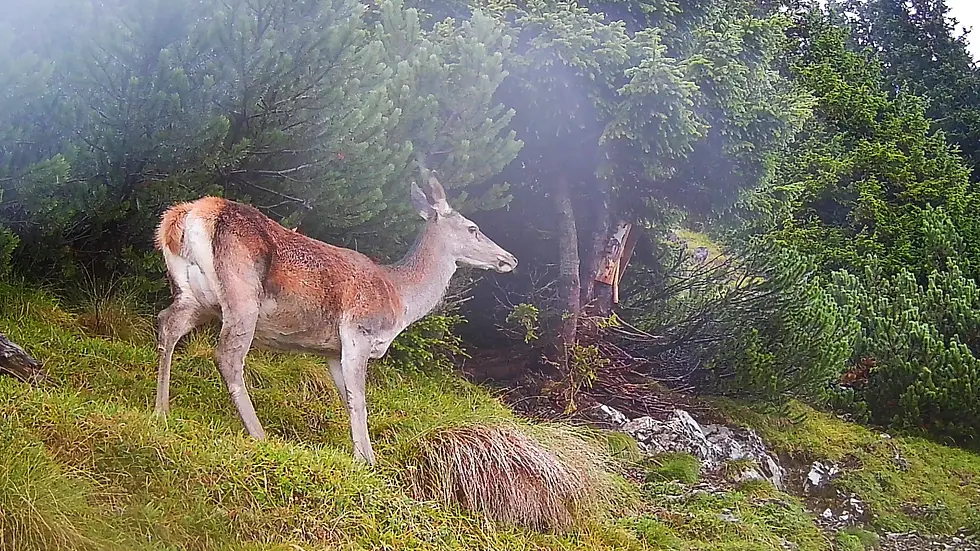
Humans May Influence Deer Behavior More Than Wolves
An even more provocative finding emerged from a study published in February 2026 in the Italian Dolomites. Researchers examined the activity patterns of red deer and wolves in and around Paneveggio Pale di San Martino Nature Park over five consecutive fall hunting seasons. Using trail camera footage collected at 42 locations – half in hunted areas and half in hunting-free zones – the scientists investigated how deer respond to natural predators compared with human disturbance.
The results were remarkable. Hunting pressure and outdoor recreation were associated with greater changes in red deer activity patterns than local wolf activity. In hunted areas, researchers recorded less deer activity during daylight hours. The typical peaks in activity around dawn and dusk were also less pronounced. Heavy recreational use pushed deer toward even greater nighttime activity. Now, that doesn't mean wolves aren't dangerous to deer. Wolves are highly effective natural predators, and red deer have evolved sophisticated strategies to avoid them.
But the study suggests that deer respond differently to human pressure in landscapes where people and wildlife share the same habitat. A wolf represents a natural predation risk. Humans, on the other hand, often create threats that occur at relatively predictable times and locations. And red deer appear to have become exceptionally good at avoiding us.
That's a fascinating thought, especially for hunters who spend countless hours wondering why deer seem to disappear during legal shooting hours.
GPS Data From 243 Red Deer Tell a Similar Story
Another study published in 2025 reached comparable conclusions using an entirely different research method. Scientists analyzed GPS tracking data from 243 red deer across six study areas in the Central Alps.
Rather than relying on trail camera photographs, the researchers followed the animals' movements and habitat preferences throughout the day and night. The patterns were striking. During daylight, red deer generally selected areas with denser tree cover, steeper terrain, and greater distances from roads and trails.
After dark, they were more willing to move into open and easily accessible habitats. The most revealing comparison involved hunting-free protected areas. In these locations, deer showed less need to restrict their daytime movements to secluded cover. In the Swiss National Park, where hunting is prohibited and visitor access is carefully regulated, the sharp distinction between daytime refuge habitats and nighttime feeding areas was considerably less pronounced. Researchers concluded that even relatively small hunting-free refuges could help encourage more natural habitat use and activity patterns. For deer managers, that's an important finding. It suggests that providing animals with predictable periods and places of safety may influence their behavior far beyond the boundaries of those protected areas.
What Does This Mean for Our Forests?

ere's where things get particularly interesting. The increasingly nocturnal behavior of red deer isn't just a challenge for hunters trying to fill their tags. It may also contribute to forest management problems.
Red deer need to eat, and they need access to sufficient forage throughout the year. When repeated disturbance discourages them from feeding in open meadows and other productive habitats during daylight, they may be forced to spend more time feeding in secluded forest cover. And what's available there? Young trees, tender shoots, buds, and bark.
Under certain conditions, this can contribute to increased browsing and bark-stripping damage, especially when large groups of deer repeatedly concentrate in the same areas. Of course, blaming every damaged sapling on hunting pressure would be an oversimplification. Deer density, forest composition, seasonal food availability, habitat quality, and weather conditions all play important roles. But the underlying problem is worth considering. If we repeatedly push deer into the thickest timber during daylight, we shouldn't be surprised when they start feeding there.
That can create a difficult cycle. Forest damage leads to increased pressure to harvest more deer. Increased hunting pressure makes deer more secretive. More secretive deer spend additional time in dense cover, where browsing and bark stripping can become concentrated.
And the resulting damage may trigger demands for even greater hunting pressure. It's a problem that can't necessarily be solved by simply spending more hours in a tree stand.
Does This Mean We Should Hunt Less?
Not necessarily. In fact, that would be the wrong conclusion to draw from these studies. Hunting remains an essential wildlife management tool, particularly in landscapes where red deer populations must be balanced with available habitat and the needs of forestry and agriculture. But perhaps the more important question isn't simply how much hunting takes place. It's how that hunting pressure is distributed across time and space.
Consider a hunting area where someone is constantly checking the same trails, disturbing bedding areas, and attempting to harvest deer whenever an opportunity presents itself.
It shouldn't come as a surprise when the animals eventually become extremely difficult to encounter during daylight. One potential alternative is a more structured hunting strategy. Instead of maintaining constant pressure throughout the season, managers can organize relatively short, carefully planned periods of intensive hunting followed by extended intervals of genuine quiet.
This approach, often referred to in European wildlife management as interval hunting, aims to achieve harvest objectives while reducing continuous disturbance. Another important tool is the establishment of clearly defined wildlife refuge areas where deer can feed and rest without being regularly disturbed. Ideally, these areas should provide access to suitable forage, allowing animals to use productive feeding habitats during daylight rather than remaining confined to dense forest cover. Of course, the hunting community can't solve this issue alone.


Comments