
Why Austria’s Hunters Are Fighting for Their Tradition

If you sit down today with seasoned hunters at a traditional hunters’ table, you’ll often hear the same sentence: “Things used to be simpler.” They’re not just talking about game in the mountains or the quiet hours on a high seat overlooking an alpine meadow. What they really mean is a time when hunting decisions were made primarily in the hunting districts themselves—not in international political arenas.
Today, that reality has changed. Modern hunting is no longer decided solely in the woods. It is negotiated in ministries, debated in Brussels, and judged daily in the court of public opinion—especially on social media. Anyone who wants to understand how dramatically the profession has changed only needs to look at the work of Jagd Österreich, the national umbrella organization of Austrian hunters.
And anyone reading the 2025 annual report of Jagd Österreich—as we did at Schuss & Stille—quickly realizes that behind the scenes a serious political struggle over the future of hunting is already underway.
The Quiet Work of Hunting Politics

Austria is home to roughly 135,000 licensed hunters. What unites them is simple: the desire to pursue their passion without an ever-growing list of legal restrictions making the craft more difficult.
That’s exactly where Jagd Österreich comes in. The organization represents hunters in more than 30 national and international committees, ranging from government ministries and EU working groups to global hunting organizations. The goal is straightforward: make sure hunters have a seat at the table where laws and regulations are written.
Most of this work happens quietly. There are no big headlines and few public campaigns. Instead, it’s a steady stream of position papers, expert discussions, and long policy meetings. Yet what’s being decided in those rooms will shape nothing less than the future of hunting.
„No Data – No Hunting“
There’s a phrase you hear frequently in Brussels these days: “No Data – No Hunting.” The message is clear. Without scientific data on wildlife populations, it will become increasingly difficult to justify hunting in the future.
For hunters, that presents a major challenge. While harvest numbers and game reports have long been well documented, comprehensive monitoring data on population trends and habitat conditions are often incomplete. And the European Union is demanding more.
For species protected under European law—such as grouse or migratory birds—Brussels now requires detailed population data and scientific monitoring. The reasoning is simple:
Anyone who wants to harvest wildlife must prove that the populations are healthy and sustainable.
As a result, hunters are taking on a new role. They are no longer just managers of wildlife populations—they are increasingly becoming data collectors and wildlife researchers.
The Wolf and the Return of Large Predators
Few issues currently stir as much debate among hunters as the return of the wolf. After years of discussion, the European Parliament decided in 2025 to lower the wolf’s protection status from “strictly protected” to simply “protected.” This change gives EU member states greater flexibility to actively manage wolf populations.
For many hunters and livestock owners, the decision was long overdue. In Europe’s cultural landscapes, wolves have virtually no natural predators, and their populations have been growing steadily for years. This development creates new challenges—not only for wildlife management but also for alpine livestock farming and rural communities. The question today is no longer whether the wolf belongs in Europe’s landscapes. The real question is how we manage its presence responsibly.
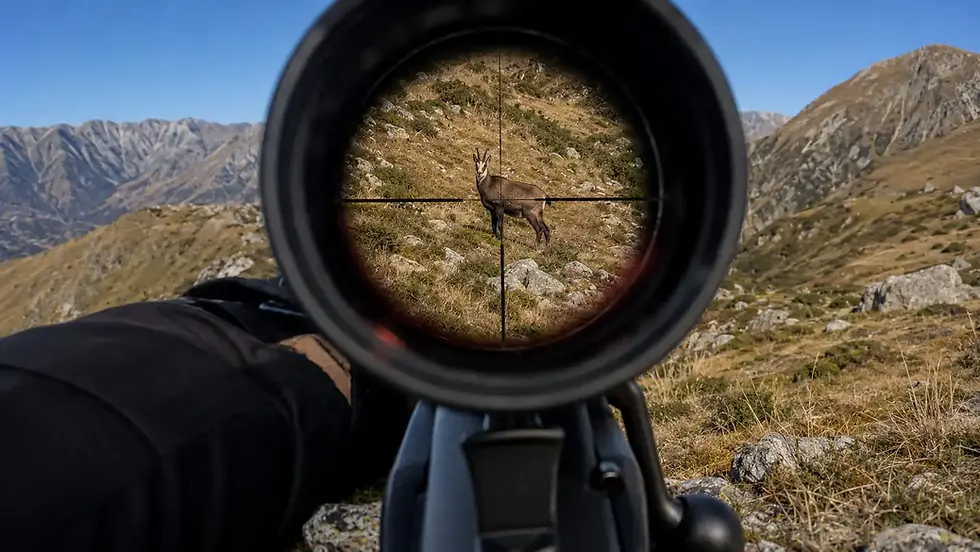
Hunting in the Crosshairs of Society
But pressure on hunting doesn’t come only from politics. Public perception plays an increasingly important role. In the age of social media, accusations and myths about hunting spread faster than ever.
Many people living in urban areas have little direct connection to rural life or wildlife management. At the same time, interest in conservation and animal welfare continues to grow.
For hunters, this means one thing: they must explain their work more clearly than ever before. That is why Jagd Österreich has recently invested heavily in modern communication—through educational campaigns, videos, and information projects designed to show what hunting truly represents today:
wildlife management
habitat conservation
disease monitoring
sustainable use of natural resources
In short, hunting today means taking responsibility for the cultural landscapes we live in.
The Future of Hunting Is Being Decided Now
The challenges facing hunters are unlikely to shrink anytime soon. Lead-free ammunition, stricter EU conservation regulations, the return of large predators, and an increasingly intense public debate about wildlife ethics are all reshaping the framework in which hunting operates.
Yet within these challenges lies an opportunity. Because one thing is becoming clear in the current debate: Sustainable wildlife use requires people who are willing to take responsibility. And hunters have been doing exactly that for generations. Quietly. Without much noise. Just the way we understand it at Schuss & Stille.

Comments