
Between Wolves and Tradition: Carinthia’s Hunters Face New Challenges
When hunters from across Carinthia come together, the conversation is no longer limited to harvest quotas, hunting traditions, or organizational matters. Instead, it centers on some of the most pressing questions facing wildlife management today: How do we coexist with the return of large predators? How do we protect alpine grazing lands and livestock? What role does hunting play in landscapes increasingly shaped by climate change, natural disasters, and shifting public expectations?
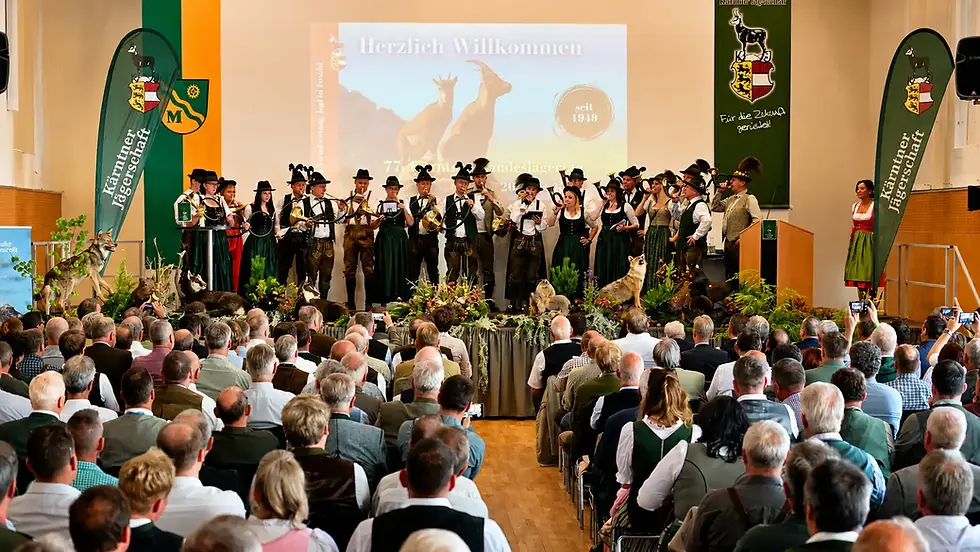
Those questions took center stage at the 77th Annual Convention of the Carinthian Hunting Association, held on June 20 in Mühldorf, Austria. Around 270 delegates and officials gathered to help shape the future of hunting in one of Europe’s most game-rich alpine regions.
Hunting Is Becoming More Complex
The days when hunters focused solely on game management and harvesting wildlife are long gone.
Today, Carinthia’s hunters are involved in a wide range of responsibilities that extend far beyond traditional hunting. Wildlife monitoring, disease surveillance, habitat conservation, crop and forest damage prevention, and predator management have become part of everyday life in the field.
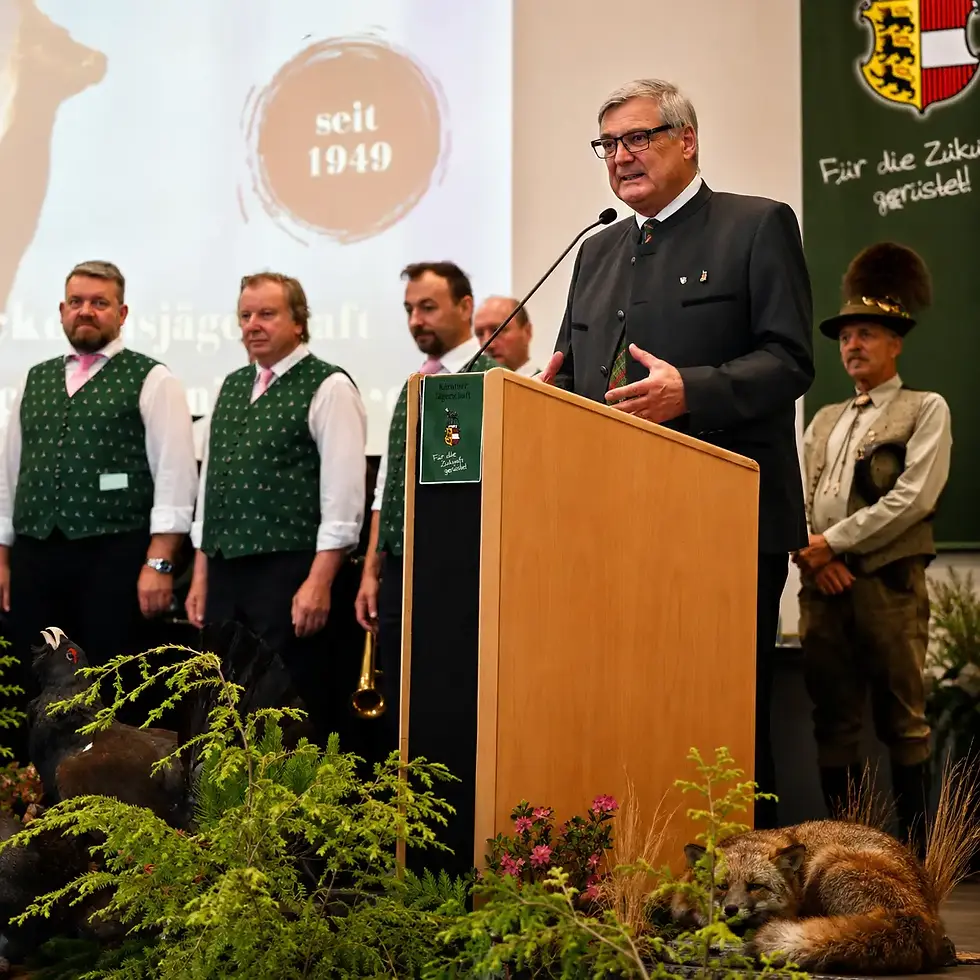
Carinthian Chief Huntsman Dr. Walter Brunner emphasized just how dramatically conditions have changed in recent years. “Wolves, golden jackals, and natural disasters are fundamentally changing our hunting grounds. The challenge is preserving our traditions while adapting to a new reality,” Brunner said.
And that reality is becoming increasingly apparent. As wolf and golden jackal populations continue to expand across the Alps, farmers and livestock producers face mounting challenges. At the same time, storms, bark beetle infestations, and extreme weather events are reshaping forests and the habitats that support native wildlife.
Wolf Management Takes Center Stage
Few topics currently generate more discussion among Carinthia’s hunters than the return of the wolf.
Experience from recent years has shown that maintaining alpine livestock grazing without an effective wolf management strategy is becoming increasingly difficult.
Martin Gruber, Deputy Governor of Carinthia and the state’s hunting representative, highlighted the critical role hunters play in the process.
“Only through the responsible cooperation of our hunters can wolf management regulations and livestock protection laws fulfill their intended purpose,” Gruber said.
Hunters serve as the backbone of the monitoring effort. They document sightings, collect genetic samples, assist authorities in evaluating livestock depredation cases, and provide crucial field data used in management decisions.
Without that information, targeted and science-based management would be nearly impossible.
The Invisible Work Behind the Scenes

While predator management often attracts headlines, much of the hunting community’s most important work happens quietly in the background.
Carinthia’s hunters operate extensive wildlife monitoring programs, tracking population trends, documenting diseases, and gathering valuable data for researchers and wildlife managers.
As public debates surrounding wildlife continue to grow, science-based information has never been more important.
These monitoring efforts provide the foundation for wildlife management decisions and allow authorities to identify emerging challenges before they become major problems.
The volunteer work performed by thousands of hunters represents an enormous reservoir of knowledge that benefits scientists, government agencies, and policymakers alike.
A Strong Voice in Vienna
One of the highlights of the convention was a presentation by Jörg Binder, Managing Director of Hunting Austria, the national umbrella organization representing hunters throughout the country.
Binder emphasized the growing importance of advocacy at the federal level.
Many decisions affecting hunting today are no longer made solely within Austria’s provinces. Issues such as wolf management, conservation law, wildlife monitoring, and European Union regulations impact hunting organizations across the country.
For Carinthia, maintaining a strong voice in Vienna has become increasingly important.
Open Discussion Instead of Stagnation
Following the presentations, delegates engaged in an extensive discussion on current issues affecting hunting and wildlife management.
Under the moderation of Kerstin De Piero, participants exchanged views on challenges within local hunting districts, cooperation with agriculture and forestry, and the future direction of the hunting association.
This direct dialogue remains one of the convention’s greatest strengths—bringing together practical field experience, political decision-makers, and scientific expertise under one roof.

Tradition Remains Strong
Despite the focus on future challenges, there was still room for what has always been at the heart of hunting culture: community, tradition, and respect.
Long-serving members were honored for their dedication to hunting and wildlife conservation. Traditional hunting horn ensembles from Drautalklang, Flattach, and Maltatal, together with the Choir of the Carinthian Hunting Association, provided a fitting ceremonial backdrop.
It was a worthy conclusion to a convention that delivered one clear message:
Hunting in Carinthia faces significant challenges—but it also possesses the people, expertise, and organizational strength needed to meet them. Or, as Chief Huntsman Walter Brunner summarized: “The Carinthian Hunting Association is well prepared for the future.”



Comments