
Golden Jackal: How Europe’s Ultimate Opportunist Is Conquering Cultural Landscapes
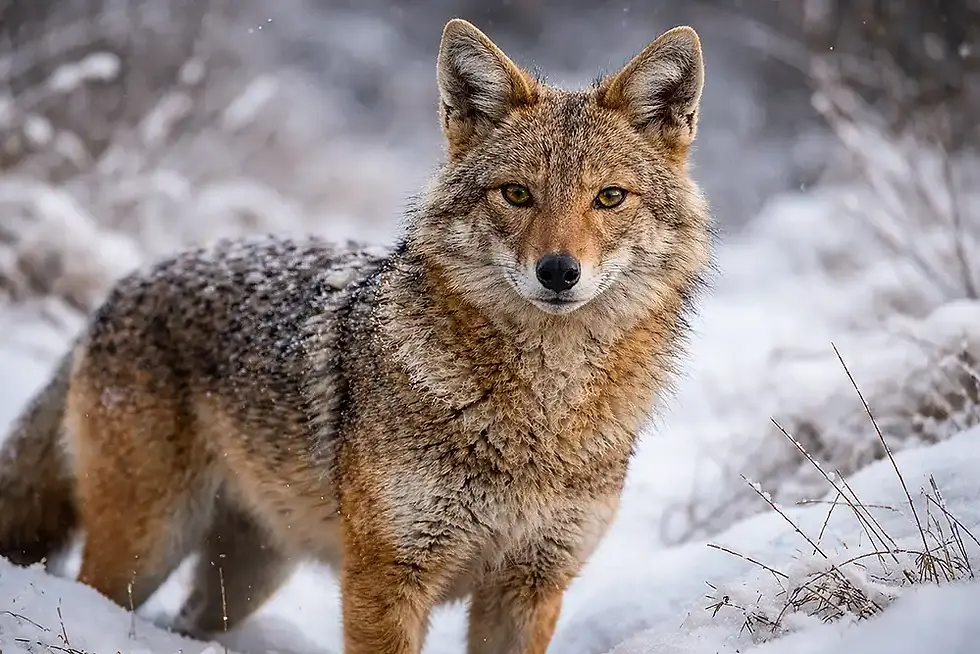
Over the past few years, the golden jackal (Canis aureus) has become a fixture in the headlines of Europe’s conservation and hunting media. What was once dismissed as a biological curiosity at the continent’s fringes has evolved into one of the most remarkable wildlife expansions of our time. The species is steadily pushing north, west, and south—moving through dense forests, crossing vast agricultural plains, and even edging into suburban and urban environments.
But it’s not just the jackal’s long-distance dispersal that has biologists and hunters paying attention. Research published over the last two years paints a far more nuanced picture of this sharp-witted omnivore and raises questions that go well beyond ecology: How accurate is the image of the shy, elusive follower of human landscapes? What role does the golden jackal actually play in modern ecosystems? And what does its expansion mean for hunting practices, game populations, and even public and animal health across Europe?
On the move—across continents
Genetic studies from international research projects reveal that the jackal’s spread is no random pioneer event. Instead, it reflects several overlapping expansion fronts. Central European populations are genetically diverse rather than uniform, indicating that animals from multiple core areas are colonizing new habitats simultaneously.
Scientists publishing in Biological Conservation and Scientific Reports point to climate change, the abundance of open cultural landscapes, and relatively low competition from larger predators as key drivers of this success. Particularly noteworthy: hybridization with free-ranging domestic dogs has been documented at certain expansion margins—an evolutionary fingerprint that raises intriguing questions about the species’ future trajectory.
Habitat use and behavior
The old notion of the golden jackal as a creature confined to field edges is outdated. Recent GPS-based research published in Animals shows a species that uses its environment with remarkable flexibility, favoring:
wide agricultural landscapes
structurally rich forest edges
transition zones between woodland and open terrain
In some European regions, individual activity ranges span several square kilometers—clear evidence of exceptional mobility and adaptability. Acoustic monitoring has also emerged as a powerful new tool, allowing researchers to detect jackals reliably even without visual confirmation.
Diet: opportunistic, but efficient
Dietary studies from Austria and as far afield as the Himalayas confirm what hunters have long suspected: the golden jackal is a true generalist. Its menu includes:
small mammals
carrion
a wide range of invertebrates
plant matter
occasionally young ungulates
This ability to switch rapidly between food sources depending on season and availability helps explain its rapid expansion. In open cultural landscapes with abundant forage and limited competition, jackal populations can establish and stabilize quickly.
Disease and wildlife health
One of the most compelling research areas of the past two years involves wildlife health and zoonoses. Across several countries, golden jackals have been identified as hosts for parasites and pathogens relevant to domestic animals—and humans:
heartworm (Dirofilaria immitis)
lungworms (Angiostrongylus spp.)
Echinococcus multilocularis
antibiotic-resistant bacteria
indications of rabies infections in India
Findings published in Parasites & Vectors, Frontiers in Veterinary Science, and medical journals underline the jackal’s importance as a “One Health” indicator species—linking wildlife, livestock, pets, and human health in a surprisingly direct way.

From Vienna to the North Sea: real-world observations
The trend isn’t just theoretical. In 2024, Vienna recorded its first officially confirmed golden jackal—an important milestone in Central European large carnivore monitoring. At the same time, survey programs along the North Sea coast report increasing sightings and tracks in areas where the species would have been unthinkable just a decade ago.
What does this mean for hunters and conservation?
The golden jackal is not an ecological wrecking ball. It is a highly adaptable generalist whose impact must be evaluated carefully and region by region. Current studies show its diet is dominated by small mammals, carrion, insects, and plant material. Roe deer fawns and ground-nesting birds may be affected locally, but they are not primary prey. As always, outcomes depend on habitat quality, land use, predator pressure, and hunting management as a whole.
Ecologically, the jackal occupies a middle ground between fox and wolf. Where wolves are present, jackal densities tend to remain lower. Competition with foxes occurs locally, but there is no evidence of widespread displacement.
From a hunting and ethical perspective, the golden jackal demands one thing above all: objectivity. It is not a problem to be solved reflexively, but a reality that requires knowledge, monitoring, and clear legal frameworks. At the same time, its growing role as a potential reservoir and bridge host for parasites—such as heartworm, lungworms, and the fox tapeworm—puts it squarely on the radar of wildlife health monitoring.
Above all, the jackal’s success mirrors the landscapes we’ve created: edge-rich habitats, milder winters, and high food availability. The species exploits these conditions relentlessly—not as a disruption, but as a symptom of a changing environment.
The golden jackal is more than just a new inhabitant of old European landscapes. It is a pioneer species of our era—resilient, adaptable, and ecologically complex. Its expansion opens doors to new scientific insights while challenging hunters, conservationists, and policymakers to think carefully about responsibility, wildlife health, and the future of managed landscapes.
In an age where human activity and wildlife ecology are more tightly intertwined than ever, the golden jackal forces us to reflect—not only on hunting and conservation, but on our own role within the living fabric of the land.


Comments