
State Hunting Conference: The Future of Hunting Starts Today
What does the future of hunting look like in Austria?
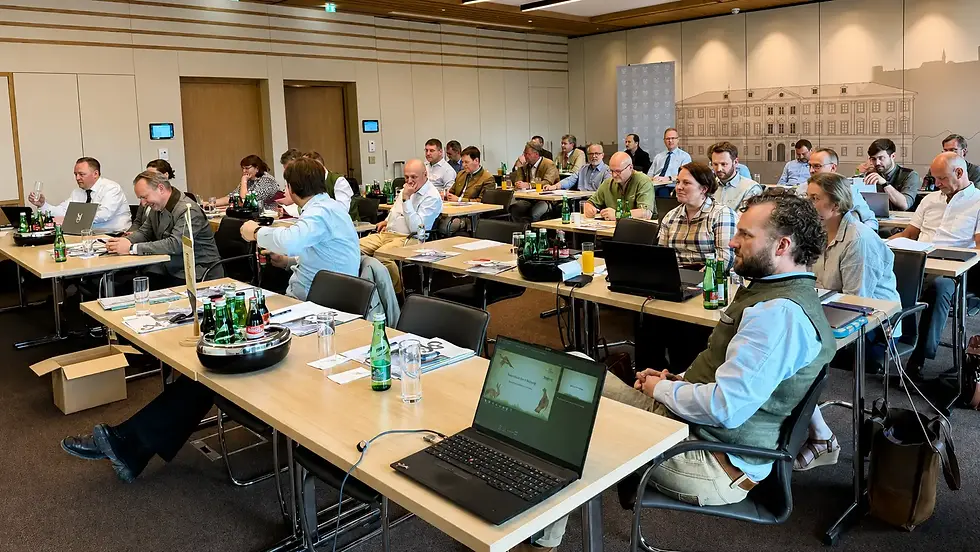
That question brought together some of the country’s leading hunting officials, wildlife scientists, digitalization experts, and conservation partners in Salzburg this spring. During the annual State Hunting Directors Conference and the subsequent Spring Delegates Conference organized by Jagd Österreich, participants explored the challenges and opportunities that will shape hunting in the years ahead.
The agenda extended far beyond traditional hunting topics. Wildlife monitoring, scientific research, digital technologies, public outreach, and cooperation with other outdoor user groups dominated the discussions.
Date Is Becoming Hunting's Most Important Tool
The days when wildlife management decisions relied solely on experience and observation are long gone. Modern hunting increasingly depends on reliable data—and that is precisely where Austria’s new Wildlife Database comes into play.
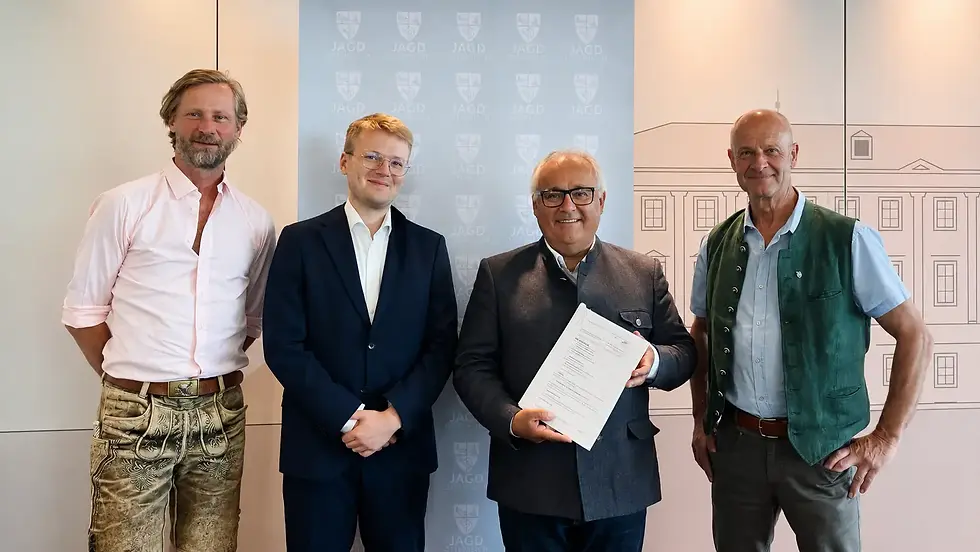
One of the conference’s most significant moments was the signing of a partnership agreement between the Austrian Wildlife Foundation and Unidata Geodesign GmbH, which will oversee the technical implementation of the nationwide project.
The concept is both simple and groundbreaking: wildlife data collected throughout Austria will be systematically recorded, scientifically analyzed, and made available for wildlife management and conservation planning.
Throughout the conference, one message was clear:
Those who want to shape the future of hunting need solid facts to build upon.
Coordination with all Austrian states is already underway. Existing databases are being evaluated and linked together, while a modern mapping platform is being developed to document the distribution of priority wildlife species across the country.
For Austria’s hunting community, the project represents a major leap forward. As public debates surrounding wildlife, conservation, predators, and habitat management continue to grow, reliable data has never been more important.
Wildlife Monitoring: The Foundation of Credibility
Wildlife monitoring emerged as one of the conference’s central themes.
The information collected by hunters today goes far beyond harvest reports and population estimates. These datasets form the basis for scientific studies, management decisions, and policy discussions concerning wildlife and habitat conservation.
The importance of monitoring becomes especially apparent when dealing with controversial issues such as wolves, wildlife diseases, and the impacts of climate change.
Austria’s hunters possess a wildlife data resource unlike almost any other in Europe. The challenge now is turning that wealth of information into an even more effective management tool.
A New Hunting Director Joins the Team
The conference also provided an opportunity to officially welcome Manfred Vonbank, who recently assumed the position of State Hunting Director of Vorarlberg.
As a symbol of unity within Austria’s hunting community, Jagd Österreich President Anton Larcher presented Vonbank with the traditional Jagd Österreich jacket.
The gesture reflected something that remains a defining characteristic of Austrian hunting: strong cooperation across regional boundaries.

Digital Habitat Assessment: Measuring a Hunting Area Objectively
One of the most innovative presentations came from Dominik Dachs of Upper Austria’s “Alliance for Small Game” initiative. His team introduced a new digital habitat assessment platform designed to evaluate hunting areas using objective environmental criteria. What habitat structures exist within a hunting district? Where are weaknesses found? Which improvements could benefit small game populations?
Rather than relying solely on personal impressions, hunters can increasingly use measurable data to answer these questions. The goal is straightforward: better habitat understanding leads to better habitat management. For small-game managers in particular, the new tool could become an invaluable asset.
Hunting Needs Visibility
Wolfgang Holzinger highlighted another important challenge facing modern hunting: public perception. Presenting the media platform 4ONE.TV, he emphasized the growing importance of video, documentary, and digital storytelling formats.
Many members of the public remain unaware of the wide range of responsibilities hunters fulfill today—from wildlife monitoring and habitat enhancement to disease surveillance and conservation work. Modern media offers an opportunity to communicate these efforts more effectively and transparently than ever before.
When Hunters and Paragliders Sit at the Same Table
One of the conference’s most intriguing discussions focused on the relationship between hunting and outdoor recreation. Johannes M. Damisch of the Austrian Aero Club presented the Hike & Fly Initiative, which aims to improve communication between hunters and paragliding enthusiasts. The principle behind the initiative is simple: Most conflicts arise when people lack information.
Future pilots will receive education about wildlife sanctuaries, sensitive habitats, and seasonal protection periods as part of their training. At the same time, direct communication channels between hunters and pilots will help address potential conflicts before they become problems. The initiative demonstrates that effective conservation often begins when different user groups talk with one another instead of about one another.
Research for the Future of Wildlife Management
A glimpse into the future of wildlife research came from FIWI Director Prof. Dr. Claudia Bieber. Through a new research grant program established by the Research Institute of Wildlife Ecology (FIWI), scientists are being supported in projects that provide valuable insights for wildlife conservation and management.
Three research projects received funding: One investigates the social structures and survival strategies of gray partridges in agricultural landscapes. Another examines cross-border movements, health, and genetics of red deer populations. A third focuses on wildlife health, disease ecology, zoonotic diseases, and the effects of environmental change on wild animal populations.
At the same time, FIWI’s research infrastructure continues to expand. A new state-of-the-art facility is currently under construction at the institute’s Wilhelminenberg campus in Vienna. The complex will include modern laboratories, genetics facilities, wildlife research units, and specialized experimental spaces. Completion is scheduled for 2028.
The Future Will be Data-Driven
The 2026 State Hunting Directors Conference made one thing abundantly clear: Hunting in Austria faces significant challenges—but also tremendous opportunities. Whether through the Wildlife Database, scientific research, digital habitat assessment, or new forms of public communication, hunting continues to evolve.
Yet one principle remains unchanged. Responsible stewardship of wildlife and wildlife habitat remains at the heart of everything. The tools may change. The responsibility does not.
And for that reason, Salzburg may one day be remembered as the place where important foundations were laid for the future of hunting in Austria.



Comments