
The Art of the Stalk: Why Every Step Matters in Mountain Hunting
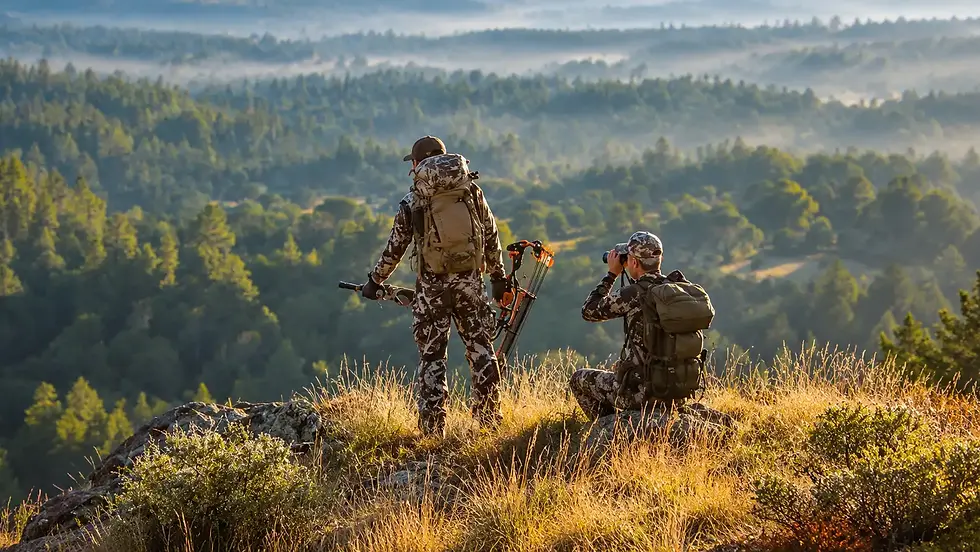
Anyone who has ever tried to stalk game in the mountains knows that success requires far more than strong legs, quality gear, and a sharp eye. Wind, thermals, terrain, and animal behavior often determine the outcome long before a shot is even considered. But what can American backcountry hunters, African trackers, and New Zealand chamois hunters teach us about the ancient art of stalking? Schuss & Stille takes a closer look at the hunting traditions and fieldcraft practiced around the world.
A small rock slips beneath a hunting boot. It rolls just a few inches before coming to rest. Barely a sound in the immense silence of the mountains. But some 220 yards away, a chamois buck suddenly raises its head. Alert. Motionless. Watching. Seconds later, it disappears behind a rocky ridge. One careless step. That's all it took.
Why Stalking Is One of Hunting's Toughest Skills
Few hunting techniques demand as much patience, discipline, and understanding of wildlife as stalking. And nowhere is that more evident than in the high mountains. The terrain is steep, natural cover is often scarce, and mountain game has developed extraordinary senses to survive in an environment where a moment's carelessness can mean death.
Yet there's an interesting paradox: The most successful stalk hunters often spend surprisingly little time actually moving. They glass. They wait. They study the terrain. And they carefully plan their approach long before taking the first step.

Hunt With Your Eyes Before You Hunt With Your Feet
ne of the most common mistakes in mountain hunting happens before the stalk even begins: Hunters start hiking when they should be glassing. Experienced mountain hunters understand that a good pair of binoculars can be far more valuable than a strong set of legs. From a carefully chosen vantage point, they systematically scan drainages, rocky ledges, alpine meadows, and ridgelines. The smallest details often matter most. An unusual shape beneath a spruce tree. A slight movement among the mountain pines. A patch of dark hair between gray rocks.
Chamois, in particular, can blend almost perfectly into their surroundings. A bedded buck may be far more difficult to spot than an animal moving several hundred yards away. The lesson is simple: Just because you can't see game doesn't mean it isn't there. That's why experienced hunters rarely glass a promising hillside only once. An animal that remains invisible during the first scan may suddenly appear during the second or third pass when it moves or the light changes.
Once a suitable animal has been located, the real work begins. Where exactly is it standing? What escape routes does the terrain offer? Where might it be an hour from now? And, most importantly, is there a way to approach without being detected?
The Wind Matters More Than Your Camouflage

The finest camouflage pattern in the world won't help much if the animal has already caught your scent. Wind is among the most important factors in any stalking situation. In mountainous terrain, however, hunters must deal with another complication: thermal air currents. During clear nights and early mornings, cold, dense air frequently flows downhill. As sunlight begins warming the slopes, rising thermals can develop on sun-exposed terrain. In many alpine valleys, afternoon winds also tend to move upslope or up-valley. As temperatures drop toward evening, these patterns often reverse.
But Mother Nature doesn't operate on a fixed schedule. Cliffs, shaded drainages, slopes receiving different amounts of sunlight, and larger weather systems can change wind direction over surprisingly short distances. Ridges and narrow gullies can be particularly unpredictable, creating swirling air currents that are difficult to anticipate.
That's why checking the wind at your actual location is essential. A small wind checker may reveal more useful information than the forecast on your smartphone. And what happens when the wind suddenly shifts toward the animal? Sometimes the smartest decision is to stop, reconsider the situation, or abandon the stalk altogether. Because no amount of slow, careful movement can make up for the wrong wind.
Why the Best Stalk Hunters Move So Slowly
Stalking isn't simply about walking as quietly as possible from one point to another. It's about moving through the landscape while minimizing the chances of being detected. That's an important distinction.
In open country, even the silhouette of a hunter standing on a ridgeline can become a problem. Human figures are especially conspicuous when outlined against the sky. Experienced hunters understand the importance of terrain features, natural concealment, and the way their movements appear from an animal's perspective.
Pace is another consideration. When solid terrain features separate the hunter from the animal, covering ground may be relatively straightforward. In exposed country, every movement deserves more thought. The final portion of a stalk is often the most demanding. This is where patience becomes especially important.
Is the animal feeding calmly? Has it suddenly become more alert? Has it already detected something unusual? An animal that abruptly lifts its head and stares intently in the hunter's direction is sending a clear warning. Continuing forward at that moment may be a mistake. The ground itself can also make or break a carefully planned approach. Loose rocks, dry leaves, and brittle branches create unwanted noise, while softer vegetation and damp ground may be considerably quieter.

North America: The Art of Spot-and-Stalk Hunting
Spend enough time studying backcountry hunting in the Rocky Mountains and you'll encounter a familiar phrase: spot and stalk. It's one of the defining techniques of Western hunting, particularly when pursuing mule deer, elk, and wild sheep. The concept sounds straightforward: Locate an animal, evaluate the situation, and attempt an approach.
But the reality is far more complicated. One of the biggest differences between European and North American mountain hunting is often the sheer scale of the landscape. Western hunters may spend hours glassing enormous mountainsides, distant basins, and remote drainages. Binoculars and spotting scopes are frequently mounted on tripods, allowing hunters to study large areas with greater stability and identify subtle movements at considerable distances. American hunting writer Steve Reid has described systematic glassing of individual sections of terrain as an essential part of successful mule deer hunting.
And finding an animal doesn't necessarily mean the stalk begins immediately. Experienced hunters first observe where the animal is traveling, where it beds, and how the surrounding terrain might influence the situation. A stalk can take hours even when the straight-line distance between hunter and animal appears relatively short.
North American elk hunters also place considerable emphasis on understanding thermal winds, especially in mountainous country. The lesson for hunters everywhere: A successful stalk begins behind the glass, not with your boots on the ground.
There's another important point worth remembering. Although Western hunting is often associated with vast distances, the ability to get closer to game remains a fundamental part of the hunting tradition. Just because modern equipment makes a long shot technically possible doesn't automatically make it the right decision.
Africa: The Extraordinary Art of Tracking
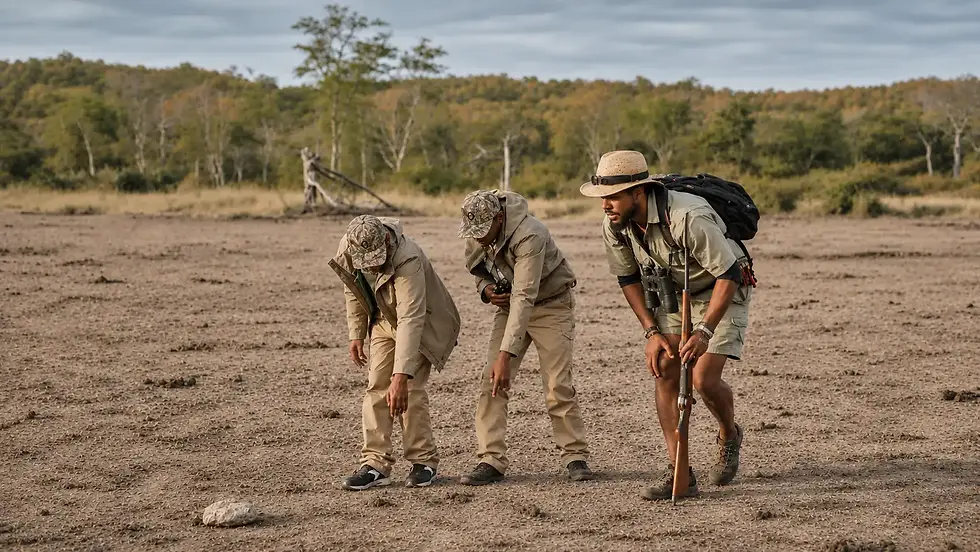
Travel to southern Africa, and the nature of stalking changes dramatically. While hunters in open mountain country often rely heavily on their eyes and optics, the African bush places extraordinary value on another skill: tracking. Here, the ground itself becomes a source of information.
A fresh hoofprint in the sand. A broken twig. Disturbed leaves. Animal droppings. To an inexperienced observer, these details may seem insignificant. To a skilled tracker, they can reveal a remarkable amount about an animal's movements and behavior. Traditional trackers from San communities, in particular, possess an exceptional understanding of animal signs and the natural environment. The abilities of highly experienced trackers have even attracted scientific interest.
When tracking kudu, eland, or other African antelope, the starting point may be nothing more than a fresh set of tracks. From there, the challenge lies in interpreting countless small clues to determine where the animal has traveled and where it may now be resting or feeding. The South African hunting organization SA Hunters describes a basic principle of stalking in the bush: Walk, stop, and look.
It sounds simple. In practice, it requires an extraordinary level of concentration. Unlike the wide-open alpine environment, thick African bush can bring hunters and wildlife into close proximity with very little warning. Of course, hunting methods across Africa are as diverse as the landscapes themselves. In open savannas and semi-desert environments, binoculars and spot-and-stalk techniques also play an important role. In dense vegetation, tracking skills and the ability to recognize subtle sounds become increasingly valuable. Dangerous game presents additional requirements for professional guidance, experience, and safety.
.
The greatest lesson from Africa's traditional trackers is that hunting isn't just about looking for animals. It's about understanding the signs they leave behind. A fresh game trail, overturned stones, or a recently used bedding area can provide valuable information even in the European Alps.
New Zealand: Chamois Hunting From a Different Perspective
The South Island of New Zealand offers another fascinating perspective on mountain hunting. In the country's Southern Alps, hunters pursue both chamois and Himalayan tahr across steep, rugged terrain. New Zealand's Department of Conservation specifically highlights the exceptional alertness of chamois and their ability to detect movement. These animals possess outstanding eyesight and a highly developed sense of smell.
One interesting recommendation from New Zealand hunting experience is that approaching chamois from above can sometimes be advantageous under suitable conditions. The reasoning is straightforward: In certain terrain, chamois may pay particularly close attention to what is happening below them. But this is far from a universal rule. Wind direction, available terrain, and the hunter's own safety must always be considered.
An exposed ridge that appears to offer a favorable approach may be completely unsuitable from either a hunting or mountaineering perspective. The important takeaway: There is no single correct direction for every stalk. The animal's position, behavior, and surrounding terrain must determine the decision.
Great Gear Doesn't Make a Great Stalker
There's no question that proper equipment matters in mountain hunting. Quality binoculars, a spotting scope when appropriate, a rangefinder, quiet clothing, and dependable boots are all useful pieces of a backcountry hunting setup. A trekking pole or hunting staff can also provide support in rugged terrain.
But more technology doesn't necessarily mean better hunting. A hunter who constantly rearranges equipment, switches between optics, or checks a smartphone may lose awareness of what's happening nearby.
For that reason, experienced stalk hunters often favor a simple, practical setup. Every piece of equipment should serve a purpose, and unnecessary noise from loose or poorly secured gear is best avoided. Thermal imaging has also changed the way wildlife can be located. While it can help reveal concealed animals, it cannot replace careful species and individual identification through suitable daylight optics or a responsible assessment of the hunting situation. Technology can support good fieldcraft. It cannot replace it.
The Most Important Decision Comes Before the Shot
Even a perfectly executed stalk doesn't guarantee a responsible conclusion. High-country hunting introduces challenges that are often absent in more forgiving terrain. Steep shooting angles, strong winds, major elevation differences, and difficult shooting positions can complicate the situation considerably. The real question is not whether a shot is theoretically possible. It's whether that shot can be taken safely, ethically, and within the hunter's actual abilities.
Positive identification, a stable shooting position, a safe backstop, and a realistic assessment of distance are fundamental considerations. An animal standing on an exposed rock ledge with no reliable backstop is not an acceptable opportunity. Likewise, even a legally harvestable animal should not be shot if it could fall into inaccessible terrain or if responsible recovery would be impossible. Recovery must therefore be part of the decision-making process from the very beginning.
Weather, available daylight, exposure to steep terrain, avalanche hazards, and the possibility of tracking a wounded animal all deserve consideration. Sometimes, a successful stalk ends without the hunter ever raising a rifle. And that can be the right outcome.
The Greatest Hunting Skill Is Patience
Whether we're talking about chamois hunters in the European Alps, elk hunters in Colorado, or traditional trackers in Namibia, one remarkable principle connects them all. They try to understand the animal before deciding what to do next.
The North American backcountry hunter may spend hours behind a spotting scope. An African tracker reads a story in the sand that most people would never even notice. And the experienced alpine chamois hunter knows that a sudden change in wind can end even the most promising stalk.
ifferent continents. Different wildlife. Different hunting traditions. But one timeless lesson: The best hunters know that patience and understanding the animal matter more than covering ground.


Comments