
The Shot Was Clean. So Why Do Hunters Sometimes Feel Guilty?

The mountains glow in the early morning light. The first rays of sunshine reach the alpine meadows. A red stag lies in the dew-covered grass. The shot was clean, the hunt successful. By all accounts, this should be a moment of pure joy. Yet as the hunter kneels beside the animal, another emotion begins to surface: sadness. Perhaps even guilt. Why does this happen? And what does it reveal about us as hunters? Nika, the psychologist on the Schuss & Stille team, explains what goes on in our minds during these deeply personal moments.
It's one of those crisp fall mornings that remind us why we love hunting in the mountains. The air is cold, and a thin layer of dew covers the alpine pastures. The first rays of sunlight creep over the peaks, bathing the landscape in a warm, golden glow. Somewhere above the timberline, a red stag lets out a powerful roar.
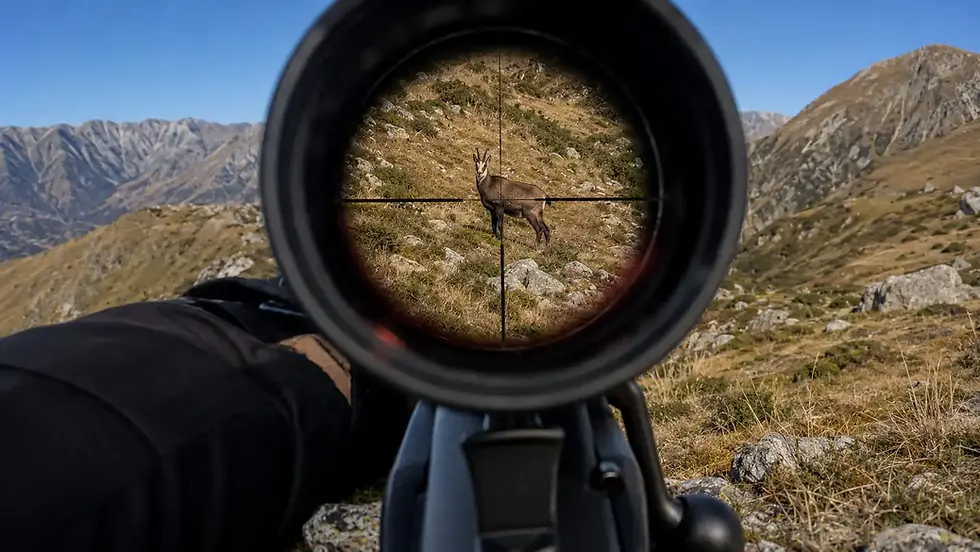
Then everything happens quickly. The stag steps out of the timber. A magnificent animal, its antlers silhouetted against the brightening morning sky. One final assessment. Everything looks right. The stag stands broadside, with a safe backstop beyond it. The crosshairs settle steadily just behind the shoulder.
The shot breaks. Moments later, the stag lies motionless in the alpine grass. Weidmannsheil!
The tension fades, and the racing heartbeat gradually slows. A magnificent red stag, harvested in breathtaking mountain country. The kind of hunting experience that stays with you for a lifetime.
But then comes a moment that we hunters rarely talk about. You walk the final few yards toward the fallen stag. Kneeling beside him, you admire his antlers and gently run your hand across his coat. Just minutes earlier, this animal was part of the living mountain wilderness. He roamed these alpine slopes, survived harsh winters, and fought rival stags for dominance during the rut. Now he lies still in the grass.
All around you, nature is waking up. The sun climbs higher, and the first birds begin to sing. It should be a perfect morning. And yet, alongside the excitement of a successful hunt, an unexpected emotion begins to creep in. Sadness. Perhaps even a sense of guilt. Even though, as a hunter, you did everything right.
Two Emotions That Can Exist Together

"From a psychological perspective, there's absolutely no contradiction here," explains Nika, psychologist with the hunting magazine Schuss & Stille. "Human beings are capable of experiencing different, even opposing emotions at the same time. The joy of a successful hunt and the sadness over an animal's death don't have to cancel each other out."
Psychologists refer to this phenomenon as emotional ambivalence. And hunting provides a particularly powerful example. After all, we spend countless hours studying the very animals we may eventually harvest. We observe their behavior, learn their habits, understand their habitat, and sometimes develop a surprisingly personal connection with individual animals. A red stag you've watched mature over several seasons is much more than a set of antlers on the wall. When you finally take that animal, you're also bringing an end to a story you've been privileged to witness.
Why These Feelings Often Surface After the Shot
During a hunt, our minds are intensely focused. We observe, evaluate the animal, assess the situation, and make decisions. Our bodies are alert, our senses heightened, and our attention locked on the task at hand. Only afterward does the mind have room for other thoughts.
"When the tension subsides, we sometimes become fully aware of the emotional significance of what we've just experienced," Nika explains.
Psychology also makes an important distinction between sadness and genuine guilt. Feeling compassion for an animal you've harvested doesn't necessarily mean you regret your decision. Guilt, on the other hand, tends to arise when we believe our actions have violated our own moral values.
ut does showing compassion make someone a weaker hunter? "Quite the opposite. Compassion isn't weakness. It simply shows that the fate of another living creature matters to us," Nika says. However, she also emphasizes that not feeling sadness doesn't automatically indicate a lack of empathy. Every hunter processes these experiences differently.

Perhaps this is where we find one of the deepest meanings of Waidgerechtigkeit. It's the understanding that the animals we pursue are never simply targets or trophies. Their lives matter, even when we consciously make the decision to take them.
Because a great day of hunting doesn't always end with unrestrained celebration. Sometimes it ends with a hunter sitting quietly beside a fallen stag as the sun rises over the mountains. And for a brief moment, simply feeling grateful. That's hunting, too.

Comments