
Why Alpine Grazing is Essential for Wildlife and Hunters

When most people think of an alpine pasture, they picture blooming mountain meadows, grazing cattle, and rustic mountain huts. For hunters, however, these high-elevation landscapes are far more than postcard scenery. They are among the most biodiverse habitats in the Alps—and habitats that are increasingly under pressure.
“Without grazing livestock, large portions of our alpine pastures would become overgrown with shrubs and eventually return to forest within a few decades,” says Josef Obweger, chairman of the Carinthian Alpine Farming Association.
What may seem like a purely agricultural issue is, in reality, a conservation issue that affects countless wildlife species—from chamois and roe deer to black grouse, mountain hares, marmots, and Alpine ibex. In other words, it affects hunters as well.
Alpine Pastures Are Not Wilderness
EOne common misconception persists: many people view alpine pastures as untouched wilderness. In reality, they are cultural landscapes that have been shaped and maintained by humans for centuries.
Cattle, horses, sheep, goats—and increasingly even llamas—keep these areas open. They prevent dwarf shrubs, alder thickets, and eventually forests from reclaiming mountain meadows.
The consequences of abandoning grazing are already visible in many regions. Where livestock disappear, open habitats quickly begin to vanish. What may appear to be “more nature” often means the loss of critical wildlife habitat.
When Alpine Pastures Disappear, Wildlife Suffers

For many hoofed game species, structurally diverse alpine meadows are vital.
Chamois rely on open mountain grasslands as feeding areas. Roe deer thrive along the transition zones between forests and meadows, where food is abundant and varied. Even red deer benefit from the nutrient-rich summer forage found on alpine pastures.
The loss of open landscapes would be especially devastating for species that depend on semi-open habitats. Black grouse require a mosaic of dwarf-shrub heath, grazed meadows, and lightly wooded areas. Marmots depend on clear sightlines to detect predators at a distance.
Many rare alpine plants are also directly linked to grazing. “Some species still exist today only because alpine pastures continue to be actively managed,” Obweger explains.
Nature's Most Underrated Land Managers

Many hunters are surprised to learn that not all grazing animals play the same role.
Cattle primarily consume grasses. Horses feed on many plants that cattle avoid. Goats, meanwhile, are specialists when it comes to preventing encroachment by brush and young trees. They readily browse alder, willow, and other woody vegetation, slowing the natural succession that would otherwise turn meadows back into forest.
Even llamas—often regarded as little more than a curiosity—have proven useful on some alpine pastures. In parts of Austria, they are intentionally used to control invasive or problematic vegetation.
The result is a diverse landscape with a wide range of habitat structures—exactly the kind of diversity that wildlife depends on.
Biodiversity Hotspots in the Alps
Many rare alpine flowers thrive only where regular grazing occurs. Species such as alpine rose, arnica, and gentians benefit from open ground and the disturbance created by livestock.
In turn, numerous insects depend on these plants, creating a complex ecological network.
What hikers see as a beautiful wildflower meadow is, for wildlife, an incredibly rich and dynamic ecosystem. Scientific studies consistently show that actively managed alpine pastures rank among the most species-rich habitats in Central Europe.
How Wolves Are Changing the Landscape
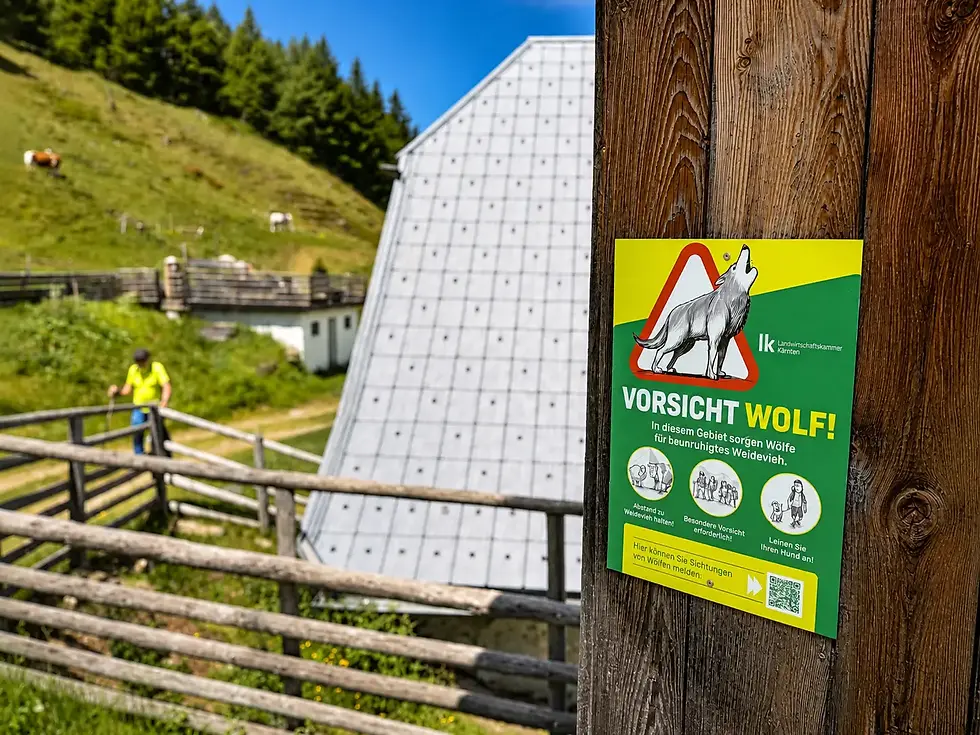
The return of large predators is becoming an increasingly important issue across many alpine regions.
Farmers report that cattle often change their behavior after encounters with wolves. Livestock become more vigilant, gather in tighter groups, and show stronger protective instincts toward calves.
From a wildlife management perspective, this so-called “landscape of fear” effect is particularly fascinating. It influences not only livestock but may also affect the movement patterns and habitat use of wild animals.
Researchers are only beginning to understand how significant these long-term changes may become.
Hunters Need Alpine Farmers

For many hunters, the magic of mountain hunting begins where open alpine meadows blend into rocky slopes, dwarf pine stands, and dark forests.
Yet this diverse landscape is anything but natural in the modern sense. It exists because generations of alpine farmers have maintained it.
When alpine pastures are abandoned, more than livestock disappear. Hunters lose visibility, feeding areas, wildlife habitat, and ultimately a piece of alpine heritage.
Anyone who values mountain hunting should recognize alpine farming as an indispensable partner in wildlife conservation.
The truth is simple: without alpine farmers, many of the landscapes we now consider classic hunting country would have disappeared long ago.


Comments