
Black Grouse Hunting: Precision at First Light

Black grouse hunting ranks among the most demanding and captivating spring hunts in the European Alps. It is a short, tightly regulated season, played out in a narrow window where habitat, weather, and the bird’s extreme sensitivity to disturbance all come together—right along the timberline, where dwarf pines, alpine shrubs, and open meadows meet.
The black grouse is a classic edge-habitat bird. It thrives in transition zones: open ground for lekking, cover in dwarf pine or young forest, and undisturbed pockets for refuge.
Across Austria, these habitats are under pressure—from encroaching vegetation, land-use changes, and increasing recreational activity. As a result, hunting is strictly tied to monitoring and harvest plans. No counts, no season.
Stage at First Light
The mating display begins as early as March and can last into May or June, depending on elevation. Leks are typically found on exposed ridges, open knolls, or gentle slopes.
Before sunrise, males take their positions and begin their ritual: bubbling calls, hissing sounds, and aggressive displays. This is the critical phase—when activity, visibility, and territorial behavior peak.

Earlier Is Not an Option
The alarm goes off in the middle of the night.The approach is made in darkness—often across snow or frozen ground.
Arrive too late, and you disrupt the birds.Arrive too early and carelessly, and you do the same.
The goal is simple: be in position before the first display begins—silent, concealed, and never silhouetted against the skyline.
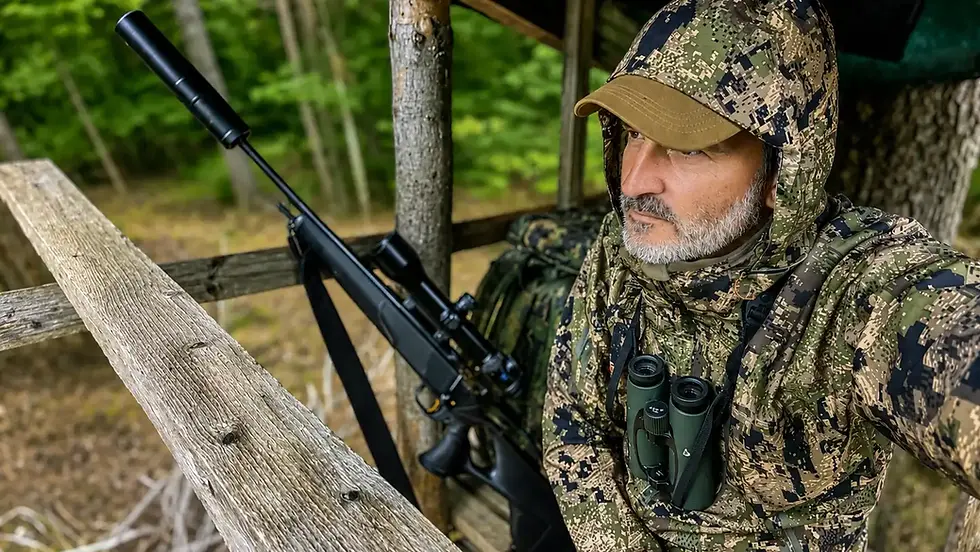
Hunting is typically conducted from a blind near the lek (where legally permitted). Setup is critical:

Wind: steady headwind or crosswind—never from behind toward the birds
Cover: use natural terrain—no sharp outlines
Approach: quiet, in the dark—no crunching snow or loose rock
Distance: close enough for a clean shot, but outside the core lek zone
There’s a saying among hunters:“Every feather has an eye.”
Black grouse are extremely sensitive to movement and sound. One mistake ends the display—and the hunt.
Only approved males are taken. Shot placement comes in the first light, often under limited visibility.
Key factors:
Solid backstop—never skylining a shot
Realistic distances—no guesswork
Absolute composure—the window is short
Law & Responsibility

Spring hunting in Austria is tightly regulated. Harvest quotas are set annually based on population surveys. In sensitive areas, hunting is restricted or suspended altogether.
At the same time, human disturbance—especially from outdoor recreation—has become a major factor affecting breeding success. Hunters must operate with maximum discipline
What It Takes
Preparation: observe lek sites from a distance before the season
Timing: plan your approach to avoid disturbing incoming birds
Gear: quiet clothing, solid footing, minimal noise
Weather: wind and temperature directly affect activity
Discipline: know when to walk away

Black grouse hunting is not about numbers—it’s about discipline.
Success demands preparation, precision, and the ability to consider the hunt a success even without firing a shot.
That’s what defines it:maximum challenge, minimal margin for error— in one of the most sensitive habitats in the mountains.

Comments