
District Hunters’ Convention: Between Numbers, Responsibility, and Reality

The cultural hall in Arnoldstein was packed. Hunters, game managers, foresters, mayors, and delegates gathered to take stock. But this was far more than a routine annual meeting. It was a state-of-the-union for hunting in Carinthia—and a hard look at the challenges ahead.
Right from the start, Carinthia’s Director of Forestry, Christian Matitz, set the tone. Climate change, windthrow, shifting vegetation, rising land-use pressure, and browsing damage are increasingly interconnected. The message was clear: the forest is changing—and hunting must evolve with it.
“There are already areas where this is becoming a real problem,” Matitz said. While low-snow winters may temporarily ease wildlife damage, he warned against complacency. “When harsh winters return, game concentrates—and that’s when problems escalate,” he explained, pointing to red deer, feeding practices, and resulting forest damage.
Matitz also addressed the growing presence of the golden jackal in southern Austria and emphasized how warmer temperatures and denser cover are reshaping wildlife habitats.
District Game Manager Lays Out the Numbers

At the core of the convention stood Wolfgang Oswald, longtime and highly experienced District Game Manager. His report was detailed, layered—and brutally honest.
When it comes to red deer, Oswald noted that the much-debated new harvest models have so far resulted in neither the feared disruptions nor any major improvements. “Overall, we’re not seeing significant change,” he said. Harvest numbers remain largely stable, but that’s no reason to relax.
Behind that apparent stability lie structural issues. Hunting pressure is still too heavily focused on stags, while the desired balance between stags, hinds, and calves remains off target. The share of mature stags also falls short of management goals.
Hunters, Oswald emphasized, are handling the new system with caution rather than blindly filling quotas. That restraint has its advantages—but it leaves a critical question unanswered: How do we achieve a truly balanced red deer population?

Oswald spoke even more clearly when addressing roe deer—calling it a major problem area. For years, there have been significant deficits in fawn harvests. “We have a clear shortfall in fawn harvest numbers,” he stated. The consequences are substantial: hundreds of animals remain unharvested each year, building up population reserves that become increasingly noticeable over time.
In some years, more than 400 fawns were not taken. Over the long term, that adds up to serious population pressure. Oswald dismissed claims of declining roe deer numbers: “It’s not enough to say, ‘I didn’t see a deer—so there are none.’”
This highlights one of the biggest misunderstandings in modern hunting. Roe deer haven’t disappeared—they’ve adapted. Forests have become more attractive, with dense understory providing better cover, while agricultural lands have lost appeal due to frequent mowing and increased disturbance. The takeaway is clear: today’s hunter must think differently than 10 or 20 years ago.
Oswald urged hunting units to analyze their populations more closely, conduct field observations, assess browsing impact, and learn to “read” the forest not just as hunters, but as forest managers. Hunting strategies must adapt: less rigid tradition, more flexibility, different timing, and increased presence in woodland habitats. Classic open-field hunting is losing relevance—forest hunting is becoming key.
Chamois, Wild Boar & Others: A Mixed Picture
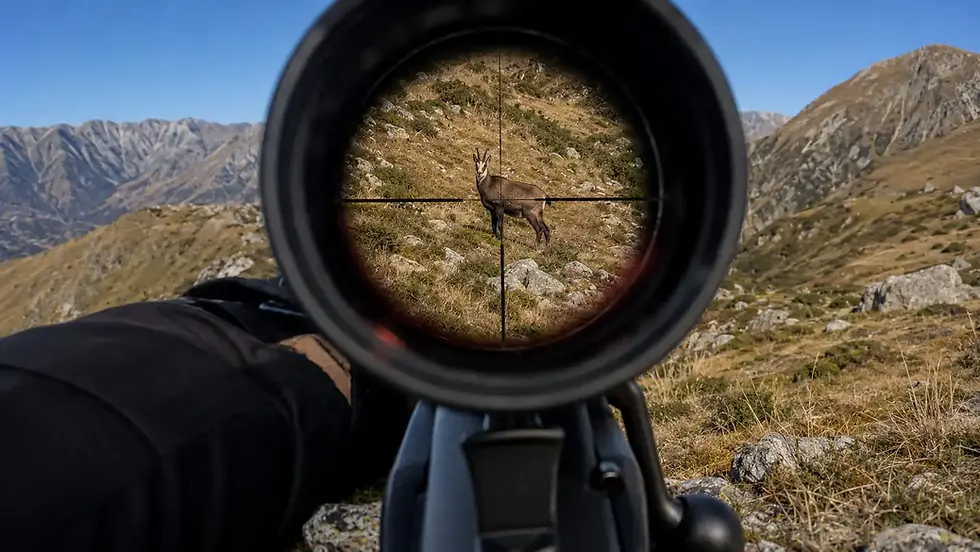
Oswald also reviewed other species. Chamois populations remain stable overall, but age structure and sex ratios require closer monitoring. A new population count is planned for fall, underscoring the need for serious monitoring efforts.
For wild boar, the feared population explosion has not yet materialized. Numbers remain manageable, but Oswald issued a strong warning about African swine fever. Vigilance, hygiene, and rapid response are essential.
The mouflon population, however, is in steep decline, with only small, fragmented remnants remaining.
Monitoring: A Matter of Survival
A central theme throughout Oswald’s report was monitoring—and his message couldn’t have been clearer: “We need data if we want to preserve hunting.”
This includes sightings, DNA samples, droppings, kill documentation, and population data. For species like wolf and golden jackal, reliable data is becoming critical—not just scientifically, but politically.
Hunting today is no longer decided solely in the field. It must stand up to legal scrutiny, public pressure, and EU-level policy debates. Anyone advocating for population control must also prove what’s actually happening on the ground.
Legal Pressure Is Increasing
Mario Deutschmann, Administrative Director of the Carinthian Hunting Association, highlighted the growing complexity of legal frameworks—especially in firearms law.
New regulations demand greater diligence in ownership, transport, and access to firearms, including stricter rules within families and clearer consequences for violations.
At the same time, external pressure is mounting: legal disputes, public complaints, and increased scrutiny of hunting practices are becoming more common.
Once again, Deutschmann stressed: without solid data, future hunting policy arguments will fall apart.
Cooperation Over Conflict

Deputy State Hunting Director Elisabeth Schaschl broadened the perspective. “Farmers and hunters face the same challenges,” she said, pointing to climate change, conservation demands, recreational pressure, and forest transformation.
Her message: solutions can only be developed together. Hunting, forestry, and agriculture must stop working against each other and start finding common ground. She also highlighted rising demands in hunter education. Ecology, conservation law, public relations, and communication skills are becoming just as important as traditional knowledge.
Tradition Still Matters

Amid all the data and analysis, hunting tradition had its place. Ferdinand Kinzel, chairman of the Carinthian Hunters’ Choir, passionately advocated for preserving the choir and attracting new members.
For over 25 years, the choir has been part of Carinthia’s hunting culture. “This truly means a lot to me,” Kinzel said.
Moments like these are a reminder: hunting is not just numbers and regulations—it’s community, heritage, and identity.
Honors for a Lifetime of Dedication
The emotional highlight came with the awarding of bronze, silver, and gold honors to deserving individuals.
The loudest applause went to Hans Ebner, who has trained young hunters for 50 years and received the Gold Honor Badge. For many, he is an institution. “I love hunting—and I love teaching it,” Ebner said. In those few words lies a lifetime of dedication.

Over the decades, hunter education has evolved from traditional instruction to modern training including wildlife biology, conservation, meat hygiene, and even digital formats like livestreams and YouTube. Yet the core remains unchanged: passing on knowledge, responsibility, and values.
Ebner’s award was more than recognition—it was the celebration of a lifetime shaping hunters—and the future of hunting itself.

A Clear Message from Arnoldstein
The Villach District Hunters’ Convention painted a realistic picture: Hunting is changing. Expectations are rising. Margins are shrinking. Responsibility is growing. But it also showed a community ready to meet those challenges—with data, expertise, open discussion, and a willingness to adapt.
The message from Arnoldstein was unmistakable: Adaptation is no longer optional in hunting—it’s essential.

Comments