
Europe’s Wolves in the Crosshairs: Where Are the Most Animals Taken?

There are few wild animals in Europe that polarize opinion as sharply as the wolf. To some, it is the ultimate symbol of wilderness reclaiming lost ground. To others, it represents a hard, daily conflict for alpine farming and grazing operations – and increasingly a topic that cuts straight to the core of hunting identity itself: Are we managing a population – or are we losing control of the debate?
Anyone asking, without emotion, where the most wolves are legally killed in Europe inevitably ends up comparing two very different worlds:
Countries with traditional, regulated wolf hunting, complete with quotas and decades-long management frameworks.
Countries with traditional, regulated wolf hunting, complete with quotas and decades-long management frameworks.
The Absolute Front-Runners: The Baltics
Latvia operates in a league of its own – because the wolf has long been managed there as a huntable game species. The numbers for the 2022/2023 season are crystal clear: quota 300, harvested 300.
This is not “exceptional removal.” This is population management as a routine practice – with harvest figures that would be considered politically explosive in Central Europe.
Why so high? Latvia’s justification follows classic wildlife-management logic: rising livestock damage, solid monitoring data, and quota adjustments based on population trends.
Estonia follows a similar path, operating with annual hunting limits. For the 2023/2024 season, the national environmental authority officially set a quota of 144 wolves.
The key point: the agency defines the framework, hunters execute the management. On paper it sounds simple – in reality, it is a highly political balancing act between rural acceptance and conservation law.
France: Strictly Protected – Yet High Numbers Through “Tirs Dérogatoires”
France embodies the European contradiction. The wolf is strictly protected, yet legal killing numbers remain high through exception mechanisms known as tirs dérogatoires.
For years, the national wildlife authority (OFB / “loupfrance”) has explained the system clearly: an annual cap – since 2019 set at 19 percent of the estimated average population.
For 2024, the legal basis includes the decree (Arrêté) of February 21, 2024, which defines conditions and limits for these derogations.
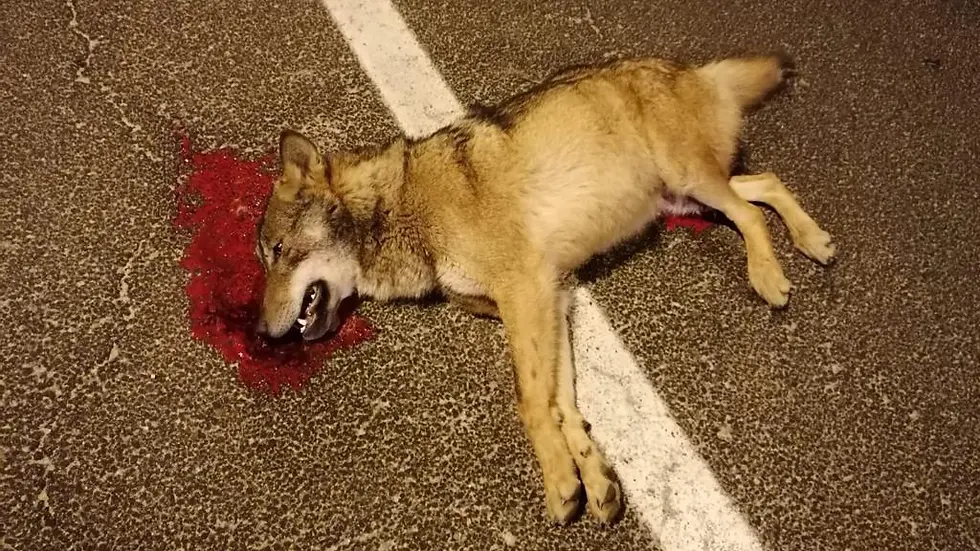
According to the official 2024 Loup-lynx annual report, 258 wolves were recorded dead from all causes. Of these, 75.1% resulted from tirs dérogatoires.
The breakdown is explicit: 194 taken under derogation permits, 42 traffic collisions, 8 illegal kills, 10 undetermined, and 4 other causes. It must be stressed, however, that this is not a complete census of all wolf mortalities – only what appears in official monitoring data.
The Alpine Corridor: Switzerland – Preventive Regulation in the Double Digits
Switzerland currently represents the most interesting laboratory in the Alpine region: preventive regulation, rather than reactive killing after damage occurs – driven by intense political pressure from grazing areas.
The Federal Office for the Environment (BAFU) summarizes the second preventive regulation phase from 09/01/2024 to 01/31/2025 as follows:
Approval for roughly 125 wolves to be taken
By the end of January 2025, 92 wolves had been preventively culled, with no reactive removals during this period
The heaviest cuts occurred in Graubünden. The canton officially reported 48 wolves taken in that timeframe – carried out by wildlife officers with support from local hunters.

Austria: No Regulated Hunt – But Targeted Removals by Decree
Austria does not have a regular wolf hunting season. What does occur happens through administrative and state-level legal instruments.
The official Wolf Status Report 2024 lists:
102 individually verified wolves in 2024
13 lethally removed under legal decrees
Plus additional losses (e.g., traffic accidents)
Numerically small by European standards – but politically explosive domestically, because every single case is publicly scrutinized in alpine regions.
Slovenia: Permit-Based Removals -
Localized, Specific, Legally Tigh
Slovenia follows a similar model. The wolf is protected; removals occur via permits.
These are not hunting quotas, but targeted interventions. The exact number of wolves taken annually is difficult to determine.
Germany: Few Legal Kills – Mortality Dominated by Other Causes
In Germany, the wolf is protected. Legal removals are rare.
The national DBBW mortality overview lists 20 wolves legally taken under management provisions since 2000. Traffic collisions remain the dominant cause of death.
Central Europe’s Biggest Misconception: Where "Heavy Culling" Is Suspected, Protection Often Rules
A look toward Southeastern and Eastern Europe reveals one of the greatest misunderstandings in the Central European wolf debate. Countries often portrayed as “liberal” or “out of control” in wolf hunting are, in reality, among the most restrictive regimes in Europe.
Europe’s Largest Wolf Population – but Hardly Any Legal Kills
Romania hosts an estimated 2,500–3,000 wolves, the largest population in the European Union. Anyone assuming high harvest numbers from that fact alone is fundamentally mistaken.
No regulated hunt
Wolf strictly protected (EU Habitats Directive, Annex IV)
Lethal control only as case-by-case derogations
→ limited to human safety or severe livestock damage
Permits centrally controlled and politically sensitive
Where the numerical potential for regulation would be greatest, the fewest wolves are actually taken. Romania relies primarily on monitoring, compensation systems, and legal oversight – not hunting-based management.
Hungary lies on the western expansion front of the Carpathian population. Wolves are present, but:
Strictly protected
Small population (approx. 80–100 animals)
No hunting, virtually no legal removals
Exception permits legally possible, but practically non-existent
Poland, with an estimated 1,900–2,000 wolves, is one of Europe’s major wolf countries. Yet:
Wolf fully protected since 1998
No hunting
Exception removals extremely rare
Heavy international scrutiny (NGOs, EU institutions, science)
Especially in eastern regions and the Białowieża Forest, political pressure is intense. Legal removals remain absolute exceptions despite high densities.
The Rest of the Balkans: A Protection Zone With Few Exceptions
Croatia:
Wolf strictly protected
Exception removals legally possible
In practice very rare
Strong influence of EU law and NGOs
Bosnia and Herzegovina, Montenegro, Serbia:
Regulations formally less strict in parts
In practice low removal numbers
No established hunting tradition for wolf management
Often unclear monitoring data, but no systematic harvest
The Balkans are not a culling hotspot – they are largely a protection region with occasional interventions.
“Taken” Is Not the Same as “Hunted”
Across Europe, it is essential to clearly distinguish between:
Regular hunting harvests (Latvia, Estonia)
Legal removals via permits and decrees (France, Austria)
Preventive regulation (Switzerland)
Mortality findings, including traffic, natural causes, and illegal kills
Mixing these categories inevitably leads to false comparisons – and that mistake dominates the public debate.
High Numbers Occur Where the Law Allows High Numbers
Baltics = hunting law & tradition → three-digit quotas
France / Switzerland = protected status but strong derogation and regulation tools → high legal mortality / preventive removals
Central Europe (AT / DE / SI) = narrow legal corridor → low numbers, but high conflict per individual case


Comments