
Tracking the Shift: Why More People Are Turning to Hunting

This isn’t a local trend. It’s happening across continents. In the United States, hunting license numbers are rising again after years of stagnation. In Scandinavia, the share of young hunters is growing. Across Central Europe, hunter education courses are packed—often with people who had little to no prior exposure to the field.
The question has changed. It’s no longer if hunting is coming back. It’s why—and why now.
Back to Reality
Social and behavioral research offers a first explanation. Modern life is shaped by screens, abstract workflows, and a constant stream of information. We act, decide, and move through complex systems—but rarely experience the direct consequences of what we do.
Hunting cuts straight through that.
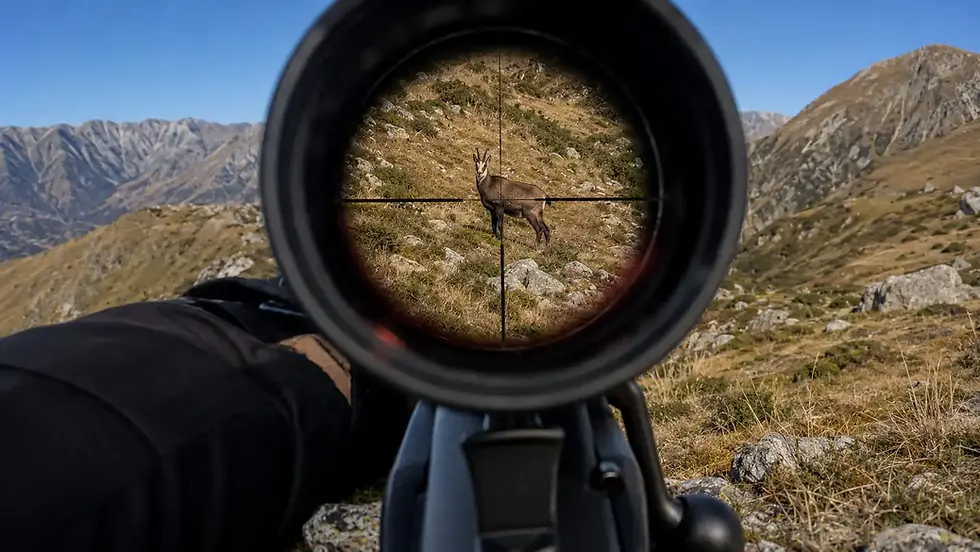
Out there, there are no filters. No simulations. No distance. Decisions are immediate—and so are their outcomes.
That immediacy is what many newcomers describe as freeing. In American research, one term keeps coming up: “grounding experience.” A way of reconnecting with reality.
When Actions Matter Again
Closely tied to that is a second key factor: self-efficacy—the feeling that your actions truly matter.
In many parts of modern life, that connection is lost. Processes are complex, responsibility is fragmented, results feel abstract.
Hunting is different. The hunter decides whether to take the shot. He takes responsibility for the animal. And he lives with the outcome.
For many—especially those coming from structured, urban professions—that clarity is exactly what they’re looking for: a world where cause and effect still align.
The Search for Honest Food

At the same time, more people are questioning where their food comes from. In North America and Northern Europe especially, industrial meat production is under growing scrutiny.
Hunting offers a clear answer.
If you hunt, you know your meat.
Studies show that this is often the entry point for newcomers. But it rarely stops there. What begins as a search for transparency often turns into a deeper engagement with nature, responsibility, and ethics.
Back Into the Body
One aspect is often overlooked: the physical experience.
While everyday life becomes increasingly sedentary and screen-based, hunting demands movement, focus, and adaptation to the natural world.
The body becomes part of the experience again.
Researchers call this “embodied experience.” It’s not just about thinking—it’s about feeling. And for many, that’s where hunting reveals its true depth.
The Power of Silence
Silence has become rare—and valuable.
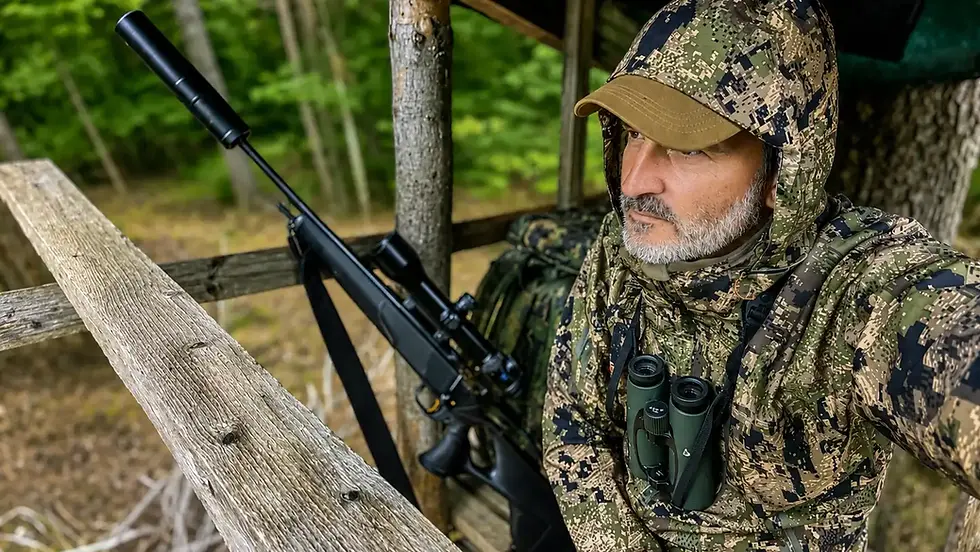
Hunting depends on it. If you’re restless, you won’t see anything. If you’re loud, you won’t experience anything.
This level of focus has measurable effects: it reduces stress, sharpens perception, and pulls you back into the present moment.
Ask hunters what keeps them coming back—and many will point to exactly that.
Facing Mortality
A sensitive but central aspect is the direct encounter with death.
In modern societies, death is largely removed from everyday life. Hunting brings it back—not dramatically, but directly and without illusion.
The moment after the shot is often described as defining—not because of the act itself, but because of the awareness it creates.
Research shows that people who actively engage with the origin of their food develop a stronger sense of responsibility.
A Different Kind of Community
Beyond personal motivation, there’s also a social dimension.
Hunting connects people—not through constant communication, but through shared experience.
In the field, on stand, or during driven hunts, a form of community emerges that’s increasingly rare in a digital world. For younger hunters especially, that connection is a key entry point.
Why Now?

It’s a response to the present.
Put all these factors together, and a clear picture emerges: hunting reconnects what modern life has separated.
It brings connection back into a disconnected world.It brings reality back into abstraction.It brings calm into a fast-moving life.And it brings responsibility back to where it often got lost.
Hunting as Resonance
So why are more people turning to hunting again? Because they find something there they’re missing elsewhere: resonance.
The feeling that the world responds. In the snap of a twig.In the first light of day.In the moment of decision. Hunting isn’t a trend. It’s a space where actions matter again.

Comments